Is Concrete or Asphalt Better for Winter?
Neither concrete nor asphalt is universally better for winter conditions. Asphalt pavement can develop low-temperature thermal cracking, while concrete can experience freeze-thaw deterioration and deicer-related scaling when moisture and exposure conditions are unfavorable. The better driveway depends on local winter temperatures, drainage, pavement design and condition, maintenance requirements, and snow-and-ice management practices.
FHWA identifies low-temperature cracking as a major asphalt-pavement failure mode and separately documents freeze-thaw and deicer-related deterioration mechanisms in concrete. (Federal Highway Administration)
When winter arrives, the battle for superior road surfaces commences with concrete vs asphalt. Which material withstands the harsh winter conditions better? The answer lies in a thorough understanding of their respective characteristics.
Concrete, known for its durability and strength, can withstand extreme temperature fluctuations, making it resistant to cracking and potholes. On the other hand, asphalt offers a smoother surface and quicker snow removal due to its dark color.
In this blog, we delve into the winter weather perspective, examining how concrete and asphalt perform when faced with freezing temperatures, snow, and ice. For your convenience, you’ll mention an ice melt solution that works well on both concrete and asphalt to keep your surface areas clean and safe.
Key Takeaways: Concrete vs Asphalt in Winter
- There is no universal winter winner. Climate, pavement construction, drainage, condition and maintenance all influence performance.
- Asphalt can develop low-temperature thermal cracking as pavement temperatures fall. FHWA identifies thermal cracking as an important cold-weather distress mechanism. (Federal Highway Administration)
- Concrete can be affected by freeze-thaw cycles, particularly when sufficient moisture is present within the material. (Federal Highway Administration)
- Deicing chemicals can contribute to concrete deterioration, including scaling, and chlorides can contribute to corrosion where reinforcing steel is present. (Federal Highway Administration)
- Subsurface frost and drainage matter to either pavement type. FHWA notes that freezing and thawing of pavement layers and subgrade can alter support and contribute to frost-related movement. (Federal Highway Administration)
- Installation price alone should not determine the choice. Maintenance and rehabilitation should also be considered when comparing long-term costs. (Federal Highway Administration)
What Actually Determines Winter Driveway Performance?
Winter performance depends on more than whether a driveway is made from concrete or asphalt. Important variables include pavement temperature, freeze-thaw frequency, moisture, drainage, the condition of the base and subgrade, existing cracks, pavement age, construction quality and winter maintenance practices.
Frost can also affect the supporting layers beneath a pavement. FHWA notes that freezing and thawing can change subgrade conditions, while frost-susceptible soils may experience frost heave and differential movement. (Federal Highway Administration)
For this reason, comparisons between concrete and asphalt should describe their typical vulnerabilities, rather than suggesting that one material always performs better in snow or freezing temperatures.
Key Characteristics of Concrete and Asphalt in Winter
Concrete in Winter
- Pavement type: rigid
- Primary cold-weather concern: freeze-thaw deterioration when moisture conditions are unfavorable
- Deicer consideration: repeated chemical exposure can contribute to scaling and other deterioration
- Maintenance focus: drainage, cracks, joints and surface condition
- Subsurface consideration: frost movement in the underlying pavement structure can affect performance
FHWA documents freeze-thaw deterioration and deicer scaling as recognized concrete-pavement distress mechanisms. (Federal Highway Administration)
Asphalt in Winter
- Pavement type: flexible
- Primary cold-weather concern: low-temperature thermal cracking
- Temperature effect: asphalt binder can become more susceptible to cracking at sufficiently low pavement temperatures
- Maintenance focus: crack sealing/filling, drainage and timely repair
- Subsurface consideration: frost and spring thaw can affect supporting pavement layers
FHWA describes low-temperature cracking as a major asphalt-pavement failure mode and notes that pavement cracks tend to widen or move during winter. (Federal Highway Administration)
Concrete vs Asphalt Driveway Comparison for Winter Weather
|
Factor |
Concrete |
Asphalt |
|
Cold-weather distress |
Freeze-thaw deterioration can occur under susceptible moisture/material conditions |
Low-temperature thermal cracking is a recognised concern |
|
Deicer considerations |
Some chemical deicers can contribute to scaling and chloride-related distress |
Avoid making broad chemical-damage claims without specific evidence; monitor cracks, moisture and surface condition |
|
Frost below pavement |
Subgrade frost can affect pavement support |
Subgrade frost can affect pavement support |
|
Winter maintenance |
Monitor joints, cracks, drainage and surface condition |
Monitor cracks, drainage and surface condition |
|
Snow removal |
Depends on condition, texture, equipment and weather |
Depends on condition, texture, equipment and weather |
|
Upfront cost |
Usually presented as the higher-cost option, but actual residential pricing is local |
Usually presented as the lower-cost option, but actual residential pricing is local |
|
Long-term decision |
Consider maintenance and rehabilitation as well as installation |
Consider maintenance and rehabilitation as well as installation |
The engineering distinctions on freeze-thaw, thermal cracking and frost are supported by FHWA guidance. (Federal Highway Administration)
Concrete vs Asphalt in Winter: Pros and Cons
|
Material |
Winter Advantages |
Winter Limitations |
|
Concrete |
Rigid pavement structure; can provide long service when properly designed and maintained |
Moist concrete can experience freeze-thaw deterioration; some deicers can contribute to scaling and other distress |
|
Asphalt |
Flexible pavement system; cracks can often be addressed with established crack-sealing or filling maintenance practices |
Low-temperature thermal cracking is a recognised asphalt distress mechanism |
|
Both |
Can perform successfully in cold climates when appropriately constructed and maintained |
Water, poor drainage, frost-susceptible subgrade and deferred maintenance can reduce performance |
FHWA separately documents concrete freeze-thaw/deicer distress, asphalt thermal cracking, and frost-related changes in underlying pavement support. (Federal Highway Administration)
Important Limitations When Comparing Concrete and Asphalt
Pavement material alone does not determine winter performance. Construction quality, drainage, base preparation, age, existing deterioration, local temperature range and winter maintenance can materially change the outcome.
Engineering research on highways also should not be treated as a guarantee of how every residential driveway will perform. Residential driveway thickness, loading, drainage, materials and installation conditions can differ substantially from highway pavements.
Avoid assuming that every crack or pothole is caused by deicing chemicals. Asphalt can develop low-temperature thermal cracking, while moisture, frost and underlying support conditions can also contribute to pavement distress. (Federal Highway Administration)
For concrete, repeated freezing and thawing and some deicer exposures are recognised deterioration mechanisms, particularly under susceptible material and moisture conditions. (Federal Highway Administration)
Asphalt vs Concrete Driveway Costs: Installation and Maintenance
When it comes to choosing between asphalt and concrete for your driveway, winter weather adds another layer of complexity. Both materials react differently to freezing temperatures, snow, and the use of deicing agents. Comparing asphalt driveway cost vs concrete involves not just upfront expenses but also long-term maintenance and environmental considerations. In this article, we’ll break down the key differences, maintenance practices, and innovative solutions to help you make an informed choice.

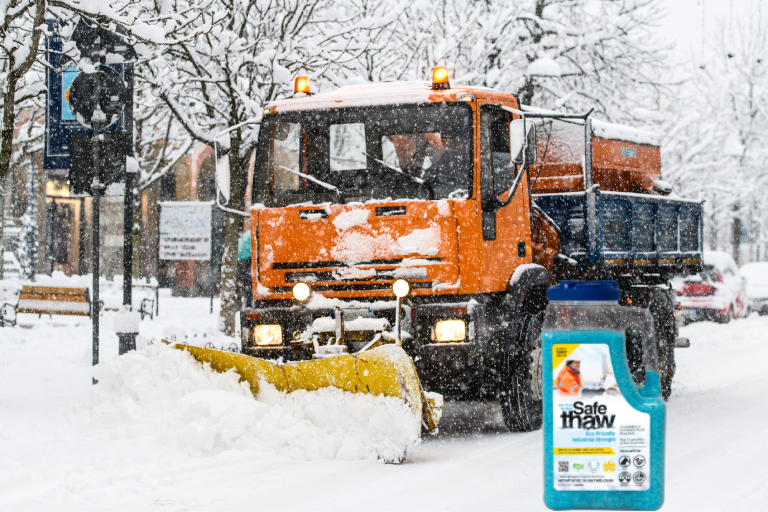
Safe Thaw
Safe Thaw was created as the ice management solution for tough winter environments.
Ideal in commercial and industrial properties, shops, government agencies,
bridges, and construction.
How Do Snow Covered Roads Affect Concrete and Asphalt Differently?
Winter brings challenges for both concrete and asphalt, and the battle between concrete and asphalt intensifies. Let’s uncover the strengths and weaknesses of concrete and asphalt when faced with the harsh realities of winter weather.
Freezing Temperatures
Both concrete and asphalt encounter freezing temperatures during winter, but their response differs. Concrete is more resistant to temperature fluctuations, which helps prevent cracking and structural damage. Conversely, asphalt can become more brittle in extreme cold, increasing the likelihood of cracks and potholes forming.
Snow-Covered Roads
Snow poses a significant challenge for road surfaces, and here the characteristics of concrete and asphalt come into play. Concrete’s light color absorbs less heat from the sun, slowing down snow melting. Conversely, asphalt’s dark color absorbs more heat, aiding in faster snow removal. However, the smoother surface of asphalt can be advantageous, allowing plows to clear snow more efficiently.
Icy Conditions
Regarding ice, the traction and safety of road surfaces become crucial. Concrete generally provides better traction due to its rougher texture, reducing vehicle sliding risks. Asphalt, with its smoother surface, can become more slippery, requiring additional measures such as de-icing agents or sand to enhance traction and ensure safer driving.
100% Salt & Chloride-Free, Fast-Acting Ice Management Solution
Deicing Chemicals
Deicing chemicals are common during winter but can affect concrete and asphalt differently. Concrete is more resistant to the corrosive properties of deicing chemicals, making it a suitable choice for areas where chemical usage is prevalent. Asphalt, however, is more susceptible to damage from these chemicals, requiring careful application and maintenance to mitigate the effects.
Long-Term Performance
Over time, winter weather can take a toll on road surfaces. Concrete’s durability and resistance to cracking contribute to its long-term performance, making it a preferred option in regions with severe winters. Asphalt, while requiring more regular maintenance to address cracking and deterioration, can still provide satisfactory performance with proper upkeep and repairs.

Winter Maintenance Practices for Concrete and Asphalt Driveways
When it comes to maintenance and repair, both concrete and asphalt surfaces require attention in the winter. A crucial aspect of winter maintenance is effectively combating ice and snow.
Maintenance Practices for Concrete and Asphalt in Winter
Winter weather can be particularly harsh on driveways, making regular maintenance crucial for both asphalt and concrete surfaces.
Concrete Maintenance in Winter
Concrete driveways are prone to scaling and cracking due to freeze-thaw cycles. To protect them:
- Sealing: Apply a concrete sealant every 2–3 years to create a barrier against moisture and deicing chemicals.
- Crack Repair: Inspect for cracks before winter and fill them to prevent water infiltration, which can expand during freezing temperatures.
- Snow Removal: Use plastic shovels or snow blowers to clear snow without scratching the surface.
Asphalt Maintenance in Winter
Asphalt is more flexible than concrete, which allows it to handle freeze-thaw cycles better, but it still requires upkeep:
- Filling Potholes: Address potholes promptly to prevent them from expanding due to ice formation.
- Reapplying Sealcoat: A fresh layer of sealcoat every few years adds protection against moisture and UV rays.
- Deicing Agents: Use eco-friendly products to prevent surface degradation and protect the environment.
Consistent maintenance ensures the longevity and safety of both asphalt and concrete driveways during winter.
Preventing Cracks And Potholes
Regular maintenance prevents cracks and potholes on concrete and asphalt surfaces. For concrete, applying a high-quality sealant can protect against freeze-thaw cycles, reducing the risk of cracking. On the other hand, asphalt surfaces can benefit from timely crack sealing and filling, preventing water infiltration and subsequent freeze-thaw damage.
Snow Removal Techniques
Efficient snow removal is essential for both concrete and asphalt surfaces during winter. In that case, Safe Thaw, an ice melt solution, can be an ideal choice for concrete and asphalt surfaces. Its unique formula helps prevent damage and provides safer conditions for pedestrians and vehicles.
100% Salt & Chloride-Free, Fast-Acting Ice Management Solution
Patching And Resurfacing
Over time, both concrete and asphalt may require patching and resurfacing to address wear and tear. Concrete patching involves removing damaged sections and replacing them with new concrete. For asphalt, crack sealing and filling are commonly used to address minor damage, while larger areas may require resurfacing with new asphalt layers.
Proper Drainage Systems
Maintaining proper drainage systems is crucial for both concrete and asphalt surfaces. Adequate drainage prevents water from pooling and infiltrating the pavement, which can lead to accelerated deterioration and damage. Regular inspections and cleaning of drainage channels, gutters, and downspouts are essential to ensure efficient water flow and minimize the risk of surface damage.
Professional Maintenance And Repair Services
In some cases, seeking professional maintenance and repair services can benefit concrete and asphalt surfaces. Experienced contractors can provide thorough assessments, identify underlying issues, and offer tailored solutions to ensure the longevity and performance of road surfaces in winter conditions. Regular inspections and timely repairs can help mitigate potential issues and minimize long-term maintenance costs.
Environmental Impact of Salt and Deicers on Pavement Materials
The choice of deicing agents not only affects the environment but also the structural integrity of your driveway.
- Impact on Asphalt:Traditional deicers like rock salt can cause asphalt to dry out and become brittle over time. This increases the likelihood of cracks and potholes. While asphalt is generally more resistant to chemical damage than concrete, repeated exposure to chloride-based products can still degrade its quality.
- Impact on Concrete:Concrete is highly susceptible to damage from deicing agents, particularly chloride-based products, which can accelerate scaling and spalling. These chemicals seep into the pores of the concrete, exacerbating freeze-thaw damage. Opting for Gaia Enterprises products, like Safe Thaw, offers a chloride-free, eco-friendly alternative that melts ice effectively without harming concrete.
- Environmental Considerations:Runoff from deicing agents can pollute waterways, harm vegetation, and disrupt local ecosystems. Using environmentally safe products not only preserves driveway materials but also reduces the ecological footprint of winter maintenance.
How Do Salt And De-Icing Chemicals Affect Concrete And Asphalt?
Salt and de-icing chemicals have a detrimental effect on both concrete and asphalt road surfaces. These substances, while effective in melting ice and snow, can accelerate the deterioration of the materials.
In the case of concrete, salt and de-icing chemicals penetrate the surface, causing corrosion of the reinforcing steel and leading to cracks and spalling. Asphalt, too, suffers from the application of these chemicals. The salts seep into the pavement, weakening its structure and causing cracks and potholes.
Moreover, the repeated freeze-thaw cycles aggravate the damage. The negative impact of salt and de-icing chemicals on concrete and asphalt underscores the need for proper maintenance and alternative strategies to minimize their usage, ensuring the longevity and durability of road surfaces.

Long-Term Cost Analysis: Is Concrete or Asphalt More Durable?
Comparing the concrete vs asphalt driveway cost involves looking beyond initial installation to long-term expenses for maintenance and repairs.
Initial Installation Costs
- Asphalt: Typically costs $3–$7 per square foot, making it the more affordable option for upfront expenses.
- Concrete: Costs range from $5–$10 per square foot, but stamped or decorative options can be significantly higher.
Long-Term Maintenance Costs
- Asphalt: Requires frequent resealing every 3–5 years and occasional pothole repairs, adding to long-term costs.
- Concrete: While initial sealing is essential, concrete generally requires less frequent maintenance, making it more cost-effective over time.
Lifespan Comparison
- Asphalt: Lasts 20–30 years with proper care.
- Concrete: Can last 30–40 years, but only with proactive maintenance to prevent scaling and cracking.
Balancing installation costs with long-term expenses helps homeowners make an informed choice based on budget and durability needs.
New Technologies to Improve Concrete in Winter Weather Conditions
Advances in materials and construction techniques are revolutionizing driveway performance in cold climates.
Heated Pavements
Heated driveways use embedded heating elements to melt snow and ice automatically, eliminating the need for deicing agents and reducing maintenance. While the upfront cost is high, the convenience and longevity benefits make it an attractive option for harsh winters.
Permeable Pavements
Permeable concrete and asphalt allow water to drain through the surface, reducing ice formation. These materials are particularly useful in areas prone to heavy snowfall and freezing rain.
Choosing the Right Option for Your Driveway
When deciding between asphalt and concrete, consider your budget, maintenance capacity, and environmental priorities. Asphalt is often the more affordable choice upfront, while concrete offers greater durability and lower long-term maintenance costs. However, both materials require regular care, particularly during winter, to withstand harsh conditions.
Products like Safe Thaw from Gaia Enterprises provide a sustainable solution for deicing, protecting your driveway while reducing environmental impact. Additionally, adopting innovative technologies like heated pavements or permeable materials can further improve performance and safety in cold climates.
Year-Round Performance: Beyond Snow and Ice covered Roads
So far, we’ve compared how these surfaces behave under snow, ice, and freezing temperatures. But homeowners often wonder—what about the rest of the year? After all, a driveway isn’t just for surviving winter storms; it has to endure summer heat, heavy vehicles, and everyday wear and tear.
Concrete, for example, may resist winter cracking better, but in hotter climates it can discolor or show surface scaling if not sealed. Asphalt, while more flexible, may soften under extreme heat, leading to indentations if heavy trucks or RVs are parked for long periods. This is why looking at year-round performance is just as important as comparing cold-weather durability.
Asphalt vs Concrete Driveway Cost Calculator: Including Industrial Grade Ice Melt vs Concrete Safe Ice Melt Costs
One of the most common questions homeowners have is: “How do I know which option really fits my budget in the long run?” This is where an asphalt vs concrete driveway cost calculator comes in handy. These tools let you plug in the square footage of your driveway, local installation costs, and even expected maintenance intervals.
But here’s the catch—most calculators stop at upfront expenses. A smart homeowner will go a step further by factoring in:
- Resealing frequency for asphalt (every 3–5 years).
- Potential scaling repairs for concrete after repeated freeze-thaw cycles.
- Resurfacing timelines (asphalt typically after 15–20 years, concrete after 25–30 years).
- Drainage solutions that may need to be added to either material.
By entering these costs into the calculator, you’ll get a clearer picture of true lifetime value, not just initial price tags.
Tackling Everyday Problems: Stains, Sinking & Repairs
Even with proper maintenance, real-world driveways face problems that go beyond cracks or ice.
Oil & Fluid Stains
It’s almost inevitable—cars leak oil or transmission fluid, and dark spots ruin the look of your driveway. While both materials stain, asphalt can be more forgiving when treated quickly. The best oil stain remover for asphalt typically involves biodegradable degreasers designed to break down petroleum without softening the asphalt binder. For concrete, poultice-style cleaners may be necessary to draw oils out of the pores.
Driveway Sinking
Another concern is the dreaded asphalt driveway sinking problem. This usually happens when the base beneath the driveway wasn’t compacted properly, or water has eroded the soil. While asphalt’s flexibility means it conforms more easily to shifting ground, it also makes sinking more noticeable. Concrete can sink too, but when it does, large slabs may need mud-jacking or replacement. Proper drainage and soil compaction during installation are the best preventions for both.
Eco-Friendly Maintenance Beyond Deicing
Earlier we discussed the effect of deicing chemicals on both concrete and asphalt. But what about eco-friendly upkeep year-round?
- Sealants: Choosing low-VOC or water-based sealants reduces environmental impact.
- Cleaning: Using natural cleaners (like baking soda or vinegar) for surface cleaning prevents chemical runoff into drains.
- Runoff Management: Installing permeable pavers alongside asphalt or concrete helps absorb water, reducing ice formation in winter and pooling in summer.
These small changes extend the life of your driveway while keeping your property more environmentally responsible.
Balancing Durability, Cost, and Lifestyle Needs
So, if you’re still weighing concrete vs asphalt, ask yourself: “What matters most to me—lower initial cost, long-term durability, or minimal maintenance?”
If you’re in a snow-heavy area, concrete offers traction, while asphalt speeds up melting—meaning your climate could decide for you.
If you want a budget-friendly install and don’t mind resealing every few years, asphalt may be your winner.
If you’re after longer lifespan and strength under heavy loads, concrete might be worth the higher upfront cost.
Related Links
- Cost Breakdown: Concrete vs Asphalt
- Winter Maintenance Tips for Your Concrete Driveway
- How to Use Ice Melt Without Causing Damage to Your Driveway
Conclusion: Making the Best Choice for Your Winter Driveway
When the conversation starts with concrete vs asphalt in winter weather, it often ends up raising broader questions about year-round performance, cost, and maintenance headaches. Tools like an asphalt vs concrete driveway cost calculator can give you a starting point, but real-world factors like stains, drainage, and even the occasional asphalt driveway sinking issue should guide your decision.
And remember—maintenance doesn’t stop with winter. Choosing the best oil stain remover for asphalt, sealing concrete every few years, or investing in proper drainage are all part of protecting your investment.
At the end of the day, whether you lean toward asphalt or concrete, combining smart maintenance practices with eco-friendly choices (like chloride-free deicers such as Safe Thaw) ensures your driveway not only survives harsh winters but thrives all year long. By thinking beyond cost and considering durability, sustainability, and lifestyle, you’ll land on the material that truly suits your needs.
Try Also Our Other Winter Safety Products
Safe Paw
The Original and #1 Selling Pet and Child Safe Ice Melt for over 20 years. Guaranteed environmentally safe – will not harm waterways and sensitive wetlands. Safe Paw can change how winter affects our planet.

Ice Traction (with Traction Magic™)
Ice Traction is your go-to winter solution for driveways, walkways, parking lots, and even black ice on the road. Unlike salt or ice melts, it delivers instant grip on snow and slippery surfaces with no wait time.
Just spread and go.
Instant Grip. Zero Melt Time.
Total Confidence on Black Ice