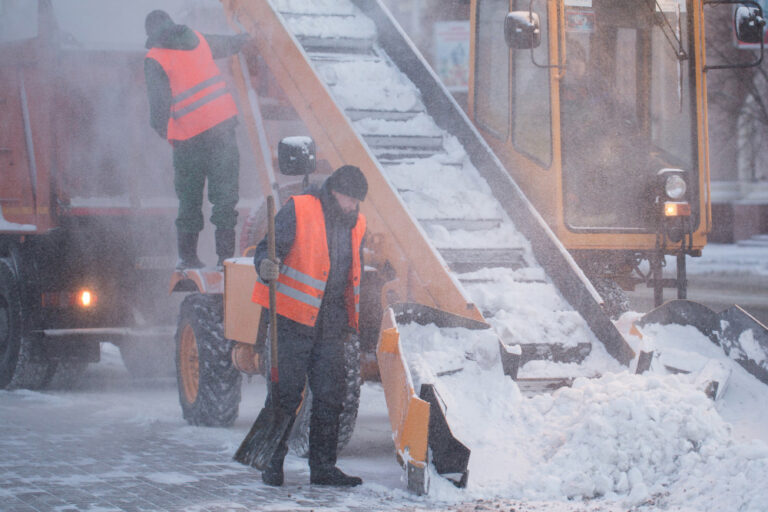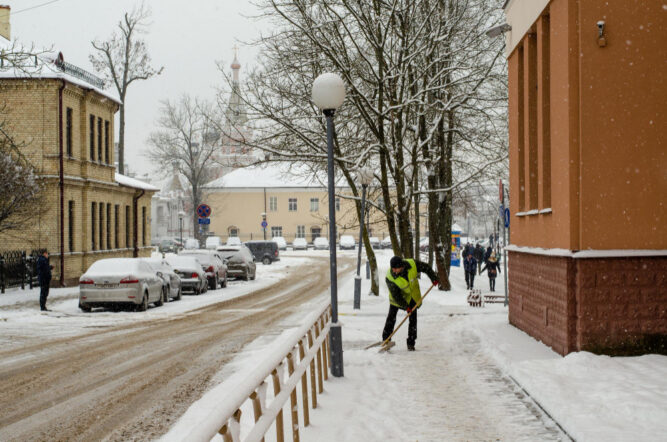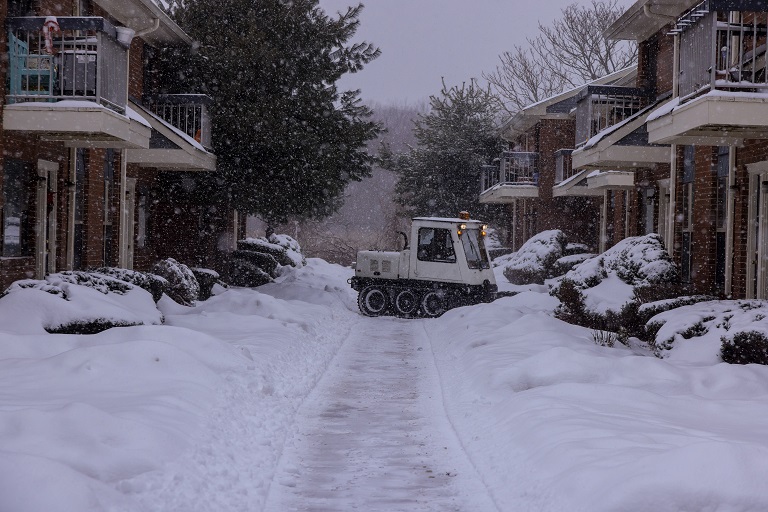
The best way to remove snow from a dirt or gravel driveway is to clear it early while leaving a thin layer of packed snow above the loose surface. Use a plastic or poly-edged shovel for small areas, a snowblower with properly adjusted skid shoes for medium-sized driveways, or a raised plow blade for larger areas. Avoid scraping directly against loose gravel, and move snow to the sides of the driveway rather than into the road. After removing the accumulated snow, address isolated ice with traction material or a surface-appropriate deicer used according to its instructions.
Shoveling
A proven age-old technique, shoveling helps remove the extra layer of snow from any surface, including gravel. Use a sturdy shovel or soft garden rake and start at the top in a uniform direction. You must pull the snow swiftly towards the road to ensure that you remove maximum snow from the driveway.

Safe Thaw
Safe Thaw was created as the ice management solution for tough winter environments. Ideal in commercial and industrial properties, shops, government agencies, bridges, and construction.
Buy NowSnowblower
- Confirm in the equipment manual that the machine and its setup are appropriate for gravel or unpaved surfaces.
- Remove or clearly mark stones, branches, edging, and other objects before operating.
- Adjust the skid shoes so the intake housing remains above loose gravel.
- Begin with greater clearance when the driveway is unfrozen or uneven.
- Direct the discharge chute away from people, vehicles, buildings, windows, and roads.
- Work in overlapping passes and leave a thin snow layer where necessary.
- Turn off the machine before inspecting or clearing a blockage; never use a hand inside the chute or auger.
Key Takeaways
- Remove snow before it becomes deeply compacted or freezes into the gravel.
- Leave a thin protective layer above loose or unfrozen gravel instead of scraping down to bare stone.
- Move snow to designated storage areas along the sides of the driveway, not into the road.
- Use a plastic-edged shovel or soft garden rake for small areas.
- Adjust a snowblower’s skid shoes to keep the housing above loose gravel.
- Keep a plow blade slightly raised until the driveway surface is firmly frozen.
- Mechanically remove accumulated snow before applying deicer to remaining ice.
- Use traction material when immediate grip is needed but melting is unnecessary.
- Follow equipment manuals and product directions for the actual surface and weather conditions.
Before You Start: Check the Driveway Condition
Snow-removal technique should change according to the condition of the driveway:
- Loose or unfrozen gravel: Leave more clearance beneath a shovel, snowblower, or plow to reduce stone displacement.
- Firmly frozen gravel: Equipment can generally operate closer to the surface, but avoid digging into high spots or ruts.
- Deep or uneven ruts: Mark the driveway edges and obstacles before the next snowfall and use extra clearance.
- Steep sections: Prioritize controlled mechanical removal and traction rather than attempting to expose every stone.
- Drainage areas: Keep snow piles from blocking ditches, culverts, and normal meltwater paths.
Best Snow Removal Method for Each Gravel Driveway Condition
|
Driveway or snow condition |
Recommended starting method |
Important setup |
Main limitation |
|
Light snow on a short driveway |
Plastic-edged shovel |
Keep the edge above loose gravel |
Requires physical effort |
|
Fresh snow on a medium driveway |
Snowblower |
Raise skid shoes and mark obstacles |
Stones may be drawn into a machine set too low |
|
Heavy snow on a long driveway |
Raised plow |
Use planned snow-storage areas |
Can displace gravel |
|
Loose, unfrozen driveway |
Shovel, blower, or plow with extra clearance |
Leave a protective snow layer |
Some snow will remain |
|
Firmly frozen gravel |
Mechanical removal closer to the surface |
Continue watching for high spots |
Ruts and stones remain possible |
|
Thin residual ice |
Traction material or compatible deicer |
Remove accumulated snow first |
Does not replace snow removal |
|
Small entrance or walkway |
Snow-melting mat |
Stable base and suitable power connection |
Limited coverage |
Prepare a Gravel Driveway Before Snowfall
- Grade and compact loose gravel before winter where maintenance is needed.
- Fill significant ruts and repair drainage problems.
- Mark both driveway edges with reflective stakes.
- Mark culverts, rocks, posts, drains, and other low-visibility obstacles.
- Select an area where cleared snow can accumulate without blocking visibility or drainage.
- Inspect shovels, skid shoes, plow shoes, scraper bars, and other equipment components.
Snow Removal and Ice Management Are Different
Mechanical tools remove accumulated snow. Deicers are intended for bonded ice or thin residual accumulation, while traction materials improve grip without necessarily melting the surface. Separating these three tasks helps prevent unnecessary product use and makes the removal sequence clearer.
Best ice melt for dirt driveway
Several misconceptions exist about using ice melt products on gravel or dirt driveways. It is one of the easiest ways to remove snow but depends on the intensity of the ice melt. At least 80% of ice melt products in the market are a blend of sodium chloride and other chloride-based products; however, using a 100% salt-free ice melt will work better.
It is less harmful to the driveway, avoids cracking, and protects the landscape. A urea-modified product with special glycols and surfactants such as Safe Thaw helps you solve your winter driveway woes.
100% Salt & Chloride-Free, Fast-Acting Ice Management Solution
Snow melting mats
Best for: Short pedestrian routes, entrances, steps, or small high-use sections rather than an entire long gravel driveway.
- Confirm that the mat is intended for outdoor use and the supporting surface.
- Prepare a stable, level placement area.
- Route power connections according to the manufacturer’s instructions.
- Inspect the mat and connection points before each season.
- Use the mat only in the limited area where continuous snow prevention is needed.
Gravel Driveway Snow Removal Methods: Pros and Cons
|
Method |
Pros |
Cons |
|
Plastic-edged shovel |
Precise control; suitable for small areas; low equipment cost |
Physically demanding; slow on long driveways |
|
Snowblower with adjusted skid shoes |
Suitable for longer areas; moves snow without repeated lifting |
Can throw stones if set too low; requires maintenance and careful setup |
|
Raised plow blade |
Efficient for long or wide driveways; useful in heavier snowfall |
May displace gravel; requires suitable equipment and snow-storage space |
|
Traction material |
Provides grip without needing to melt all the ice |
Does not remove snow or melt ice; may require later cleanup |
|
Surface-appropriate deicer |
Can loosen thin bonded ice after mechanical clearing |
Effectiveness varies with composition and temperature; runoff and overapplication require consideration |
|
Snow-melting mats |
Can keep a small high-use area clear |
Power and installation requirements; usually impractical for an entire long driveway |
Warnings and Limitations
- Do not scrape aggressively down to bare gravel when the ground is loose or unfrozen.
- Do not direct shoveled, blown, or plowed snow into the road.
- Keep snow piles clear of sightlines, drainage ditches, culverts, entrances, and utility access.
- Mark large stones, posts, edging, drains, and other objects before they disappear under snow.
- A snowblower set too low may pick up stones and discharge them at high speed.
- Never place a hand inside a snowblower chute or auger. Shut down the machine and follow its clearing procedure.
- Avoid assuming that more deicer will work faster. Apply only the directed amount.
- Do not use fertilizer as a deicer. Nutrients in fertilizer and urea-containing deicers can move with runoff and affect waterways. Penn State Extension deicing guidance
- Gravel surfaces may remain partly snow-covered after careful clearing. Trying to expose every stone can cause more surface displacement.
- Results depend on snowfall depth, moisture content, temperature, slope, driveway compaction, equipment setup, and operator technique.
Related Article Links
- How to Overcome Snow Removal Challenges on a Gravel Driveway
- Pros and Cons of a Gravel Driveway
- Snowblower vs. Ice Melt for Your Business
- 3 Tips for Maintaining Snow-Free Driveways
Conclusion
It is recommended to use the best ice melt for dirt driveway that is easy to use and does not harm your gravel and dirt driveway. Urea-modified product with active glycols and special surfactants, ice melting boosters, and inhibitors is the best way to melt ice on your driveway without harming it. Safe Thaw can create a protective layer that does not get affected by the freeze/thaw cycle, making your winter as smooth as possible.
Try Also Our Other Winter Safety Products
Safe Paw
The Original and #1 Selling Pet and Child Safe Ice Melt for over 20 years. Guaranteed environmentally safe – will not harm waterways and sensitive wetlands. Safe Paw can change how winter affects our planet.

Ice Traction (with Traction Magic™)
Ice Traction is your go-to winter solution for driveways, walkways, parking lots, and even black ice on the road. Unlike salt or ice melts, it delivers instant grip on snow and slippery surfaces with no wait time.
Just spread and go.
Instant Grip. Zero Melt Time.
Total Confidence on Black Ice