If you’re looking for an ice melt that’s going to work well in your driveway, sodium chloride may not be the best choice.
Sodium chloride is a salt made from sodium and chlorine. It’s commonly used as an ice melt because it lowers the freezing temperature of water and helps prevent ice from forming on surfaces. However, it has some drawbacks that make it less than ideal for use on driveways.
For one thing, it can damage your concrete driveway if it’s used too often or at too high of a concentration. Sodium chloride also tends to leave a residue behind once the ice melts, which can make the surface slippery for a period of time after application. Therefore, you must use an ice melt without sodium chloride.
In addition to its effects on concrete, sodium chloride has been found to be a negative environmental factor because it can leach into groundwater systems near where it’s applied.
If you want a safer option for your driveway during winter months, consider using chemical-free ice melt.

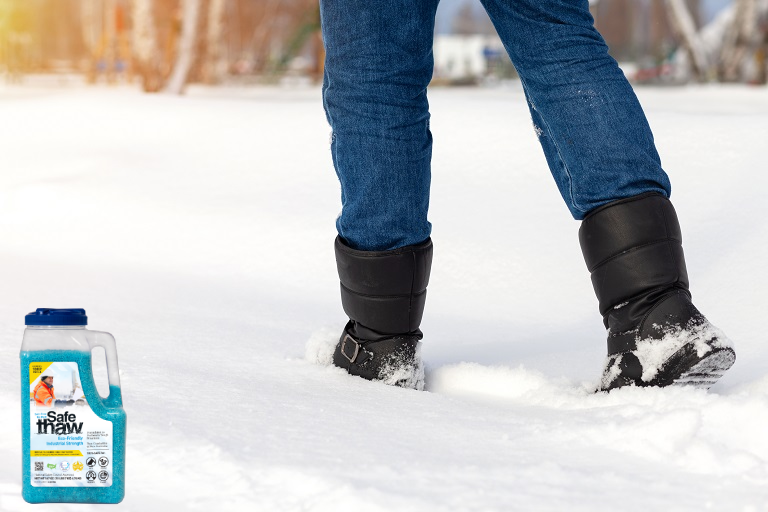
Safe Thaw
Safe Thaw was created as the ice management solution for tough winter environments. Ideal in commercial and industrial properties, shops, government agencies, bridges, and construction.
Buy NowIce Melt Without Sodium Chloride
When a significant amount of snow accumulates over time, the safest action is to apply a natural and safe ice melt solution that can also avoid slipping.
The proprietary traction compound in Safe Thaw offers resistance to slip and fall. It has a lifespan of more than 72 hours on the surface and does not include any salt, chlorine, or acetate.
Safe Thaw works in two steps: first, it breaks the ice and then melts it without allowing it to freeze again. This combination is good for melting through even the most challenging situations, including ice formations and packed snow. Therefore, it can be safely used even in thick ice and lowest temperature.
100% Salt & Chloride-Free, Fast-Acting Ice Management Solution
How Industrial Ice Melt Work
Ice melts work by starting a chemical reaction that makes heat melt ice and snow. Melting ice also lowers the temperature at which water freezes again. As a result, it stops the freeze-thaw cycle from happening on your concrete.
When ice melt thaws, it soaks into your concrete like water into a sponge. When this liquid freezes again, it makes the concrete bigger. It can lead to scaling, spalling, popouts, and even cracks. If this happens, you’ll have to fix it in the spring, which will take time and cost money.
The most widely used ice melt, rock salt, only reduces the refreezing temperature by roughly 20 degrees Fahrenheit. However, if the temperature swings above and below 20 degrees, which can happen virtually every day in some places, rock salt will thaw and refreeze.
Therefore, you need to get an effective ice melt that works even in low temperatures and can work round the clock. Concrete shouldn’t be exposed to toxic chemicals of ice melt. Chloride, which makes up most of the ice melt, can be very bad for concrete and the environment.
Try Also Our Other Winter Safety Products
Safe Paw
The Original and #1 Selling Pet and Child Safe Ice Melt for over 20 years. Guaranteed environmentally safe – will not harm waterways and sensitive wetlands. Safe Paw can change how winter affects our planet.

Ice Traction (with Traction Magic™)
Ice Traction is your go-to winter solution for driveways, walkways, parking lots, and even black ice on the road. Unlike salt or ice melts, it delivers instant grip on snow and slippery surfaces with no wait time.
Just spread and go.
Instant Grip. Zero Melt Time.
Total Confidence on Black Ice