Steep driveways can be a challenge to drive on, but they don’t have to be. The good news is that yes, there are some easy ways to get traction on steep driveways. The bad news is that you’ll be doing a lot of work outside before you can comfortably go inside. But hey: at least it’s not raining!
Steep driveways are common in the United States and Canada, as well as countries in Europe, Asia and elsewhere around the globe. One of the reasons they’re so prevalent is because they make it easier to get vehicles into garages without having to back up through tight spaces or maneuver a turn on a flat surface. The steeper slope also allows drivers more control over their vehicles’ speed while still maintaining traction on inclines—which makes them safer for drivers and pedestrians alike.
Key Takeaways
- Snow must be removed before applying most ice-control or traction products.
- Deicers help loosen or melt ice, while sand and traction granules mainly improve grip.
- A layered approach—snow removal, ice treatment, and added traction—is usually more effective than relying on one method.
- Four-wheel drive may help a vehicle move, but it does not eliminate the risk of sliding or improve braking on ice.
- Tire chains should only be used when approved by the vehicle and chain manufacturers.
- Persistent drainage, shade, or surface-texture problems may require professional driveway improvements.
- Avoid driving on the slope when the driveway cannot be made reasonably safe.
However, steep driveways can be dangerous if you don’t know how to navigate them safely. With that in mind, here are easy ways for anyone who struggles with driving up or down steep grades:
Apply Sand or Kitty Litter: These materials can provide temporary traction when spread on icy areas.
Gravel: Spreading a layer of gravel on your steep driveway can help you avoid the wheels from skidding. It gives the wheels a better grip and ensures you can go to your home without any worry.
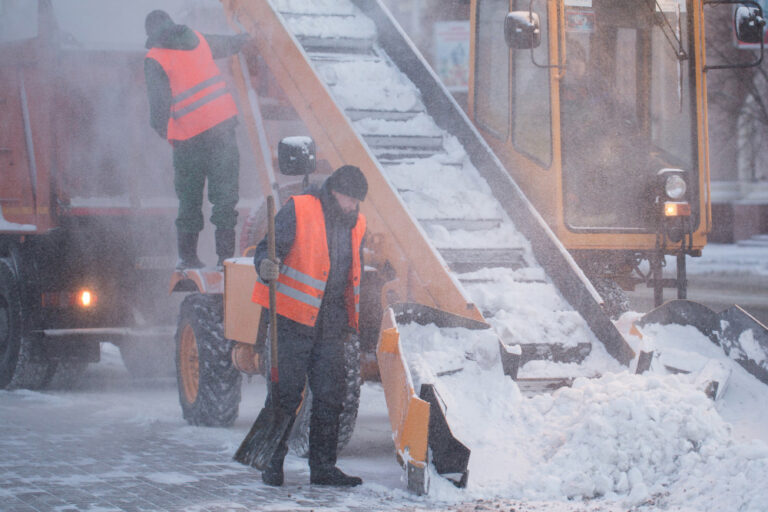
Snow Removal Equipment: You can use a snow blower or a snowplow to remove the excess layer of snow from the driveway before using it. It is advisable to employ professional services to remove the snow and apply a layer of deicer on the surface.
Tire Chain: The best way to help you deal with a steep slope is to use a tire chain that will protect the wheels from slipping. It helps to form a better grip and drive up the slope easily.
Use Traction Aids: Apply traction aids like Safe Thaw, which is designed to break the surface tension of ice and provide immediate traction.
Use Snow Tires: Invest in snow tires with a tread designed for improved traction on slippery roads.

Safe Thaw
Safe Thaw was created as the ice management solution for tough winter environments. Ideal in commercial and industrial properties, shops, government agencies, bridges, and construction.
How to Get Out of a Steep Concrete Driveway Traction?
Getting out of a steep driveway requires caution and proper technique, especially in icy conditions. Here are some steps to follow when looking for a solution to how to get traction on icy driveway:
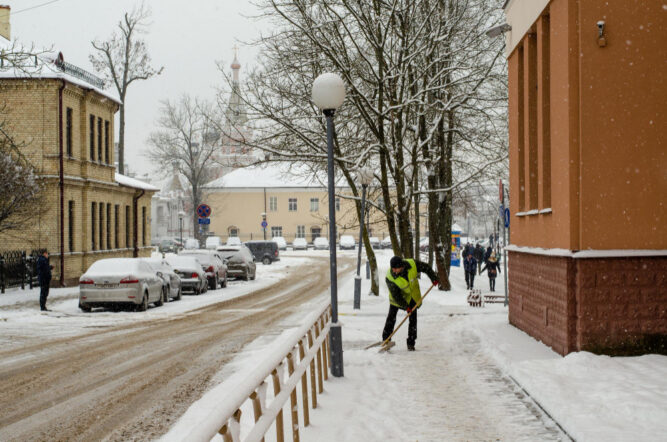
- Clear Snow and Ice: Remove any snow and ice from your driveway using a snow blower or shovel.
- Apply Traction Aid: Use a traction aid like Safe Thaw to improve traction on ice driveway,.
- Engage Four-Wheel Drive: If your vehicle has four-wheel drive, engage it to improve stability.
- Start Slowly: Gradually accelerate and maintain a steady speed as you ascend the driveway.
- Avoid Sudden Movements: Refrain from sudden braking or acceleration, which can lead to loss of traction.
- Keep Tires Inflated: Ensure your tires are properly inflated for better grip.
Pros and Cons Table
|
Method |
Advantages |
Limitations |
|
Sand or fine gravel |
Provides immediate grip; inexpensive; useful in emergencies |
Does not melt ice; can be displaced; requires cleanup |
|
Ice-management product |
Helps loosen or melt bonded ice |
Performance depends on temperature, application, and product formulation |
|
Dedicated traction granules |
Designed to improve grip; useful on black ice and packed snow |
May require reapplication; does not always melt ice |
|
Winter tires |
Improves cold-weather vehicle traction |
Requires seasonal installation and storage; cannot overcome every icy condition |
|
Tire chains |
Can provide strong grip in severe snow or ice |
Must be vehicle-approved; can affect handling and damage surfaces if misused |
|
Traction mats |
Immediate targeted traction; reusable |
Cover only a limited area; can shift if improperly installed |
|
Heated driveway system |
Helps prevent recurring accumulation |
Higher purchase and installation cost |
|
Textured resurfacing |
Provides a long-term improvement in surface grip |
Requires professional work and does not replace winter maintenance |
Safe Concrete Ice Melt
You can use a natural safe concrete ice melt product that sticks to the surface and helps you easily drive up the steep slope. It may stick to your tires but will help prevent your wheels from skidding. If you’re like most people and want to melt ice concrete without salt, Safe Thaw is the best choice. With Safe Thaw, you get an opportunity to save your concrete and your landscape around the community center because of its 100% natural urea-modified product ingredients. With special glycols, surfactants, and unique ice melting boosters, Safe Thaw breaks the thin layer of ice around your community center and does not cause any harm.
Comparison Table
|
Option |
Melts Ice? |
Adds Immediate Grip? |
Best Use |
|
Sand |
No |
Yes |
Temporary traction on an already icy surface |
|
Fine gravel |
No |
Yes |
Emergency tire grip on steep sections |
|
Dedicated traction product |
Usually no |
Yes |
Black ice, packed snow, tire paths, and walkways |
|
Ice-management product |
Yes, depending on formulation and conditions |
Product-dependent |
Loosening or reducing bonded ice |
|
Traction mat |
No |
Yes |
Garage entrances and isolated slippery areas |
|
Heated mat/system |
Prevents or melts accumulation |
Indirectly |
Recurring ice in fixed high-risk areas |
|
Winter tires |
No |
Improves vehicle grip |
Regular winter driving |
|
Tire chains |
No |
Yes |
Severe conditions where approved |
Recommendations
- Best for immediate emergency grip: Sand, fine gravel, or a dedicated traction product.
- Best for bonded driveway ice: A properly selected ice-management product followed by a traction aid.
- Best for black ice: A traction product applied to the tire path, combined with appropriate ice treatment.
- Best for recurring garage-entry ice: Traction mats or heated mats.
- Best for regular winter driving: Proper winter tires.
- Best for severe snow where permitted: Vehicle-approved tire chains.
- Best long-term improvement: Better drainage, textured resurfacing, traction strips, or an installed snow-melting system.
- Best layered approach: Clear snow, treat remaining ice, and add traction material to high-risk areas.
Warnings and Limitations
- Do not stand downhill from a vehicle on an icy slope.
- Never assume four-wheel or all-wheel drive makes braking safe on ice.
- Do not lower tire pressure unless the vehicle manufacturer specifically instructs you to do so.
- Use tire chains only when they are approved for the vehicle and tire combination.
- Sand and traction granules improve friction but generally do not remove the underlying ice.
- Do not mix ice-management chemicals unless the manufacturers explicitly permit it.
- Keep all products away from children and animals, and follow the package directions.
- Test any treatment on a small, inconspicuous area if surface compatibility is uncertain.
- Newly placed, damaged, improperly cured, or poorly sealed concrete may need specialized guidance.
- When a driveway remains unsafe, park in a safer location and contact a snow-removal or driveway professional.
100% Salt & Chloride-Free, Fast-Acting Ice Management Solution
How To Make Sloped Driveway Less Slippery?
To reduce slipperiness on a sloped driveway, consider the following tips:
- Use Traction Mats: Place traction mats or anti-slip mats on the driveway.
- Apply Traction Paint: Consider using specially designed traction paint on the driveway surface.
- Clear Snow and Ice: Regularly remove snow and ice buildup from the driveway.
- Install Heating Systems: Consider installing a heated driveway system to prevent ice accumulation
- Heated Snow-Melting Driveway Mats: Easy to use and costs less than a dollar a day to run, these are energy-efficient mats with little to no maintenance once they have been placed for the winter. It allows you to climb the steep driveway without any hassle.
Steep Slope Driveway: Real-World Challenges and Smarter Fixes
Even after you’ve tried gravel, snow tires, or kitty litter, a steep slope driveway in the middle of winter can still feel like a challenge. Many homeowners notice that while quick fixes work for a while, the driveway often becomes slippery again when temperatures drop and the snow compacts into solid ice. So, what do you do when basic tricks aren’t enough?
The answer lies in layering solutions. Think of it this way: just like you wear more than one layer of clothing in extreme cold, your steep driveway often needs more than one layer of protection. For example, you could combine a regular snow-clearing routine with Safe Thaw for traction, followed by traction mats in high-risk spots like near the garage door or the curve of the slope. This layered approach ensures you’re not relying on one method alone, which can make all the difference during a heavy freeze.
Steep Driveway Snow Solutions That Go Beyond the Basics
If you’ve ever asked yourself, “Why does my driveway feel more dangerous after I shovel?” you’re not alone. The reason is simple—shoveling removes snow but often leaves behind a thin icy film that’s even more slippery than before. This is where steep driveway snow solutions come into play.
One effective approach is to treat your driveway immediately after shoveling with a chloride-free ice melt like Safe Thaw. Unlike rock salt, which can damage surfaces and plants, Safe Thaw creates a safe, melt-and-prevent cycle that helps keep ice from reforming. Another smart option? Heated mats. While they’re more of an investment, they’re especially helpful on driveways with curves or shaded areas where sunlight never quite reaches.
And if you’re looking for a more budget-friendly method, applying sand or fine gravel right after ice melt gives you both melt and traction. It may seem old-fashioned, but it’s one of those steep slippery driveway solutions that still works when paired with modern products.

Steep Slippery Driveway Solutions for Icy Conditions
Now let’s get practical. You’re pulling out of your garage, your tires hit a patch of ice, and suddenly you’re sliding sideways. What do you do? Here’s where steep slippery driveway solutions come into play.
First, keep in mind that it’s not just about what you put on the ground, but also how you drive. Starting slow, maintaining steady momentum, and avoiding sudden braking are small but powerful habits that reduce slips. Second, applying traction aids directly under your tires before pulling out can give you that first crucial grip. Products like Safe Thaw double up as both an ice melt and a traction booster when sprinkled under the tires, which means you won’t be stuck spinning in place.
Another overlooked solution is driveway design. If you’re considering resurfacing, choosing a textured concrete finish or adding traction strips can reduce slipperiness year-round. While it’s not an immediate fix, it’s worth keeping in mind if you’re investing in a long-term upgrade.
How to Get Traction on Icy Driveway Without Damaging It
One of the biggest questions people ask in winter is, “How to get traction on icy driveway without ruining the surface?” It’s a valid concern because many traction agents—like rock salt—cause concrete scaling or asphalt cracking over time. That’s why choosing the right product matters just as much as applying it correctly.
Safe Thaw, being chloride-free, protects both asphalt and concrete, even surfaces that are only a few years old. Plus, it’s pet-safe and won’t burn grass or landscaping near your driveway. When you’re dealing with a steep slope driveway, where the angle itself increases the chances of slips, using a reliable traction product becomes non-negotiable.
For a quick boost, you can also keep a bucket of sand or kitty litter in your car. If you ever get stuck halfway up your icy driveway, sprinkle it under the tires to create instant traction. It may not melt the ice, but it can be a lifesaver in emergencies.
100% Salt & Chloride-Free, Fast-Acting Ice Management Solution
Conclusion
Steep driveways will always bring unique challenges, but the key lies in using a mix of prevention, traction aids, and smart driving techniques. By now, you know that steep driveway snow solutions aren’t limited to just shoveling or throwing down rock salt. From eco-friendly melts like Safe Thaw to heated mats, sand, and traction strips, you have plenty of steep slippery driveway solutions to choose from.
The real takeaway? No single method is enough on its own. For long-lasting safety and durability, layer your approaches and make them part of your winter routine. Whether it’s knowing how to get traction on icy driveway during a snowstorm or investing in better surface treatments for the future, each small step adds up to a driveway that’s not only safer but also easier to manage.
So next time you’re staring down your steep slope driveway after a fresh freeze, you’ll know exactly what to do—and more importantly, you’ll know how to do it without damaging your property or the environment.
Related Winter Driveway Guides
- How to Get Traction on an Icy Driveway Without Damaging It
- Five Tips to Keep a Business Driveway Safe
- How Safe Thaw Works
- Safe Ice Melt for Concrete
- Commercial and Bulk Ice Melt Options
Try Also Our Other Winter Safety Products
Safe Paw
The Original and #1 Selling Pet and Child Safe Ice Melt for over 20 years. Guaranteed environmentally safe – will not harm waterways and sensitive wetlands. Safe Paw can change how winter affects our planet.

Ice Traction (with Traction Magic™)
Ice Traction is your go-to winter solution for driveways, walkways, parking lots, and even black ice on the road. Unlike salt or ice melts, it delivers instant grip on snow and slippery surfaces with no wait time.
Just spread and go.
Instant Grip. Zero Melt Time.
Total Confidence on Black Ice