Building a small-scale concrete cement driveway is easy, but installing an entire driveway can be challenging. It needs proper planning and preparation. You can split it into smaller, manageable sections if you have an extensive driveway. Moreover, you also need to pay close attention to the type of ice melt you are using on your concrete. Is calcium chloride ice melt safe for concrete or a urea-based melt? How to protect the concrete, and what are the steps to lay a driveway?
So here are the answer to all your queries and ways to find the concrete-safe ice melter.
– Planning and permission
Proper planning is essential before laying a concrete driveway. You won’t require planning permission for porous concrete before starting work, but if you use a non-porous mix, you probably need planning permission.

Safe Thaw
Safe Thaw was created as the ice management solution for tough winter environments. Ideal in commercial and industrial properties, shops, government agencies, bridges, and construction.
Buy Now– Pick out the best driveway company
There are many parameters to pick out the best driveway company, like Experience, competitive rates, references, and services. You should choose the one who is trustworthy and can provide the best quality at a reasonable cost.
– Design and dimensions
Decide on the design and the dimensions in advance so you can have a correct estimate and the material assumption. To lay a beautiful and lasting concrete driveway, you must choose the suitable material and measure the dimensions too.
– Order the Concrete
For DIY driveways, it is necessary to make arrangements in advance to finish the work within the deadline. Once you are ready with all the planning and estimation, discuss with your contractor about the material requirement and make an order so that work can be finished within the scheduled time.
100% Salt & Chloride-Free, Fast-Acting Ice Management Solution
Is calcium chloride ice melt safe for concrete?
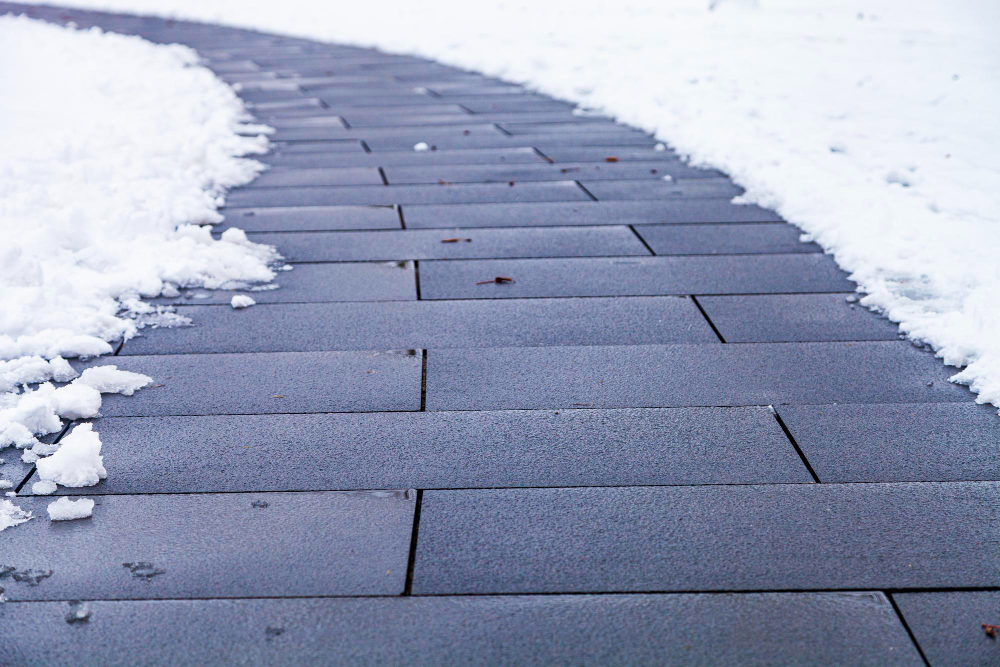
Protection is critical to maintaining the long-term beauty and strength of concrete driveways. Especially during winters, when you apply chemicals to melt the ice, you must understand if sodium chloride, magnesium chloride, and calcium chloride are suitable for your concrete. These chemicals can damage your concrete during the freezing and thawing process, which creates tension inside the concrete pores and results in cracks.
The safe ice melt: Safe Thaw
Safe Thaw, a urea-based natural formula, is safer for your concrete driveways as it does not allow the brine to reform the ice and protects the longevity of your concrete driveways.
Modified carbonyl diamide crystal, unique glycols, patented traction agents, non-ionic surfactant accelerants, and pellets with specific inhibitors with a bluish tint are the primary ingredients of Safe Thaw.
The unique crystals release a deicing liquid that has no adverse effects on the materials and speeds up melting. It is an industrial-strength ice melt perfect for large construction sites with many vehicular and pedestrian traffic, parking lots, walkways surrounding the building, and machinery.
100% Salt & Chloride-Free, Fast-Acting Ice Management Solution
Conclusion
A small concrete driveway installation is easy by following the above steps; however, for a more significant project, you require an expert contractor. As well as choosing a concrete-safe ice melter can protect your concrete driveway’s longevity and reduce the maintenance cost.
Try Also Our Other Winter Safety Products
Safe Paw
The Original and #1 Selling Pet and Child Safe Ice Melt for over 20 years. Guaranteed environmentally safe – will not harm waterways and sensitive wetlands. Safe Paw can change how winter affects our planet.

Ice Traction (with Traction Magic™)
Ice Traction is your go-to winter solution for driveways, walkways, parking lots, and even black ice on the road. Unlike salt or ice melts, it delivers instant grip on snow and slippery surfaces with no wait time.
Just spread and go.
Instant Grip. Zero Melt Time.
Total Confidence on Black Ice