Introduction
In winter, dealing with ice becomes a significant concern. We often ask, “what temp does ice melt?” to identify the best strategies to combat this problem. Understanding the science behind ice melting, including the temperature thresholds for melting, can empower us to make more effective choices in our ice management practices.
The Basics Of Ice Melting
Ice melts when it absorbs heat, changing from a solid to a liquid state. This process begins at a specific temperature known as the melting point. For pure water ice, this melting point is 0 degrees Celsius or 32 degrees Fahrenheit. However, in the real world, this threshold can be influenced by various factors, including the presence of impurities and pressure variations.

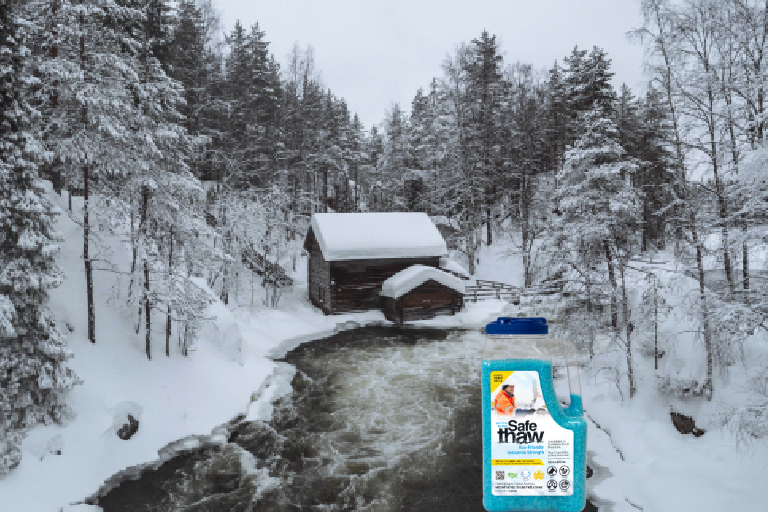
Safe Thaw
Safe Thaw was created as the ice management solution for tough winter environments. Ideal in commercial and industrial properties, shops, government agencies, bridges, and construction.
Buy NowThe Limitations Of Ice Melt Mats
“Ice melt mat” is a common search phrase for individuals looking for alternative solutions to melt ice. These mats, often heated electronically, are designed to melt ice and snow upon contact. However, they have considerable drawbacks.
Firstly, ice melt mats are energy-intensive. To maintain the heat necessary to melt ice, they require a substantial amount of energy, leading to higher electricity bills. Furthermore, they pose a risk of short circuits and fire hazards if not correctly managed.
Secondly, they are expensive and require professional installation. If you need to cover a large area, the costs can rapidly add up.
100% Salt & Chloride-Free, Fast-Acting Ice Management Solution
The Superior Alternative: Safe Thaw
Given these limitations, there’s a pressing need for a more efficient and safer ice melt solution. Here is where Safe Thaw makes its entrance. This product is designed to break the surface tension and instantly melt ice, speeding up the melting process and being efficient in various temperatures.
- Safe Chemistry: Safe Thaw is made with a patented dual-effect formula that’s efficient and works faster than traditional methods. Its effectiveness isn’t just dependent on “what temp does ice melt” but how it can catalyze the process efficiently.
- People, Pet & Plant Safe: Unlike chemical-laden alternatives, Safe Thaw is 100% salt-free, making it safe on eyes, skin, paws, and even if ingested. It provides a safer alternative for your family, pets, and plants.
- Surface Safe: The product is 100% safe on all surfaces including decking, at least 1-year-old concrete, pavers, brick, stone, etc. It provides a peace of mind that your property won’t be damaged in the process of ice melting.
- Non-Corrosive & Non-Conductive: Safe Thaw doesn’t damage delicate machinery and won’t short circuit expensive equipment, offering significant advantages over both traditional salt and ice melt mats.
Conclusion
While understanding “what temp does ice melt” provides insights into the natural process of ice melting, it doesn’t offer an effective solution in the face of heavy snowfall and below-freezing temperatures. Alternatives like ice melt mats, while initially seeming like a good idea, pose their own set of problems.
Safe Thaw stands as a superior solution, offering a safer, more efficient, and property-friendly method of ice melting. By breaking the surface tension and speeding up the melting process, Safe Thaw offers a reliable and effective method for managing winter’s icy grip.
Try Also Our Other Winter Safety Products
Safe Paw
The Original and #1 Selling Pet and Child Safe Ice Melt for over 20 years. Guaranteed environmentally safe – will not harm waterways and sensitive wetlands. Safe Paw can change how winter affects our planet.

Ice Traction (with Traction Magic™)
Ice Traction is your go-to winter solution for driveways, walkways, parking lots, and even black ice on the road. Unlike salt or ice melts, it delivers instant grip on snow and slippery surfaces with no wait time.
Just spread and go.
Instant Grip. Zero Melt Time.
Total Confidence on Black Ice