In the quest to understand the dynamics of ice melting, a fundamental question often arises: at what temperature does ice melt? This question is not only pivotal in meteorological studies but also crucial for industries relying on effective ice melt solutions.
Key Takeaways
- Pure ice melts at approximately 0°C (32°F) under ordinary atmospheric conditions.
- Melting point and melting speed are different concepts: ice may be at its melting point but still take time to melt.
- Pressure can affect the melting equilibrium of ice.
- Dissolved substances such as salt lower the freezing point of water and allow liquid brine to exist below 0°C.
- Different deicing chemicals have different temperature limits.
- Surface temperature is more useful than air temperature when evaluating real-world deicing conditions.
- Refreezing can occur if brine becomes diluted or temperatures fall.
FHWA explains that a salt-water solution can have a freezing point below 0°C and that dilution or changing surface temperatures can lead to refreezing. (Federal Highway Administration)
The Science Behind Ice Melting
At the most basic level, ice begins to melt when it reaches 0°C (32°F). This is the point where ice transitions from a solid to a liquid state. However, you might be wondering- at what temperature does ice melt. Well that can be influenced by various factors including pressure, impurities in the ice, and the surrounding environment.
Melting Point vs Melting Rate
The melting point tells us when ice can begin changing from solid to liquid under particular conditions. It does not tell us how quickly a block or layer of ice will disappear. Melting speed also depends on heat transfer, ice thickness, sunlight, surrounding temperature, surface conditions and contact with liquid water or a deicer.
Why Salt Can Melt Ice Below 0°C
When a soluble salt dissolves in available moisture, it forms a brine. The freezing point of that solution is lower than that of pure water. This process is called freezing-point depression and explains why some deicers can help loosen ice even when the surface temperature is below 0°C.
FHWA’s phase-diagram guidance confirms that brines below their eutectic concentration can remain liquid below the 0°C melting temperature of pure ice. (Federal Highway Administration)
Air Temperature vs Surface Temperature
Air temperature and pavement temperature are not always identical. For practical snow and ice management, surface temperature helps determine whether a particular deicing treatment is likely to form and maintain liquid brine.
Factors Affecting The Melting Point Of Ice
Understanding the melting point of ice is not just a matter of stating a specific temperature. In reality, factors like atmospheric pressure and the presence of substances within the ice can lower or raise this melting point. For instance, under high pressure, ice can melt at temperatures slightly below 0°C.

Safe Thaw
Safe Thaw was created as the ice management solution for tough winter environments. Ideal in commercial and industrial properties, shops, government agencies, bridges, and construction.
The Downsides Of Traditional Ice Melts
Common Considerations With Chloride-Based Deicers
- Metal exposure: Chloride-containing solutions can contribute to corrosive conditions around metals.
- Water runoff: Chloride is highly soluble and can move with meltwater into surrounding water systems.
- Soil exposure: Repeated chloride inputs can accumulate in areas receiving winter runoff.
- Vegetation exposure: Elevated chloride concentrations can affect some plants and aquatic organisms.
- Application amount: Using more material than necessary increases residue and runoff without necessarily improving low-temperature performance.
USGS documents chloride from road and surface deicing as a significant source of chloride reaching surface water and groundwater. (USGS Publications)
Pros and Limitations of Common Ice-Melting Approaches
|
Approach |
Advantages |
Limitations |
|
Sodium chloride |
Familiar; widely used; can form brine below 0°C |
Performance slows significantly as temperatures fall; adds chloride |
|
Calcium chloride |
Can form brine at lower temperatures than sodium chloride |
Chloride-based; application and surface considerations remain |
|
Magnesium chloride |
Lower-temperature brine capability than sodium chloride |
Still contributes chloride |
|
Chloride-free ice melt |
Avoids introducing chloride from the deicer itself |
Temperature performance depends on the particular formulation |
|
Traction material |
Provides friction without needing to melt ice |
Does not remove or melt the ice |
|
Mechanical removal |
Removes snow and ice without relying solely on a chemical reaction |
Labour/equipment required; compacted ice may remain |
FHWA publishes reference phase data for several common deicing chemicals, including sodium, calcium and magnesium chloride. (Federal Highway Administration)
Important Ice-Melting Limitations
0°C does not mean all ice immediately disappears. The melting point describes a phase condition; actual melting speed depends on heat transfer and environmental conditions.
A deicer’s theoretical lowest brine temperature is not the same as its practical working temperature. Laboratory phase limits describe what a solution can theoretically remain liquid at under particular concentrations. Real-world ice melting can become impractically slow well before that limit.
More deicer does not automatically overcome low temperature. Surface temperature, moisture availability, ice thickness and product formulation all influence performance.
Refreezing remains possible. Meltwater or brine can become diluted or encounter lower temperatures after application.
FHWA distinguishes a salt solution’s eutectic temperature from real operational conditions and explains how dilution can cause a solution to refreeze. (Federal Highway Administration)
The Safe Thaw Advantages
In this context, the value of a chloride-free, toxin-free ice melt solution becomes evident. Safe Thaw, an industrial-grade ice melt, stands out in this regard. It’s designed not only to be effective but also environmentally friendly and property-safe.
100% Salt & Chloride-Free, Fast-Acting Ice Management Solution
Non-Corrosive And Safe For Industrial Use:
Safe Thaw is a non-corrosive product, meaning it won’t harm industrial properties or machinery. This is a significant advantage, especially in settings where maintaining the integrity of equipment is crucial. Unlike salt and chloride-based ice melts, Safe Thaw does not pose a risk of short circuits in electrical systems, making it a safer choice for industrial environments.
Long-Term Effectiveness:
The concentrated formula of Safe Thaw assures long-term effectiveness, maintaining its ice-melting capabilities from season to season. This endurance is particularly beneficial for industrial applications where consistent performance is necessary.
A Unique, Patented Composition:
Safe Thaw’s patented dual-effect compound comprises a modified crystalline amide core infused with a special glycol admixture and traction agents. This unique composition not only enhances its ice-melting efficiency but also ensures it remains environmentally friendly.
100% Salt & Chloride-Free, Fast-Acting Ice Management Solution
Ice and Deicer Temperature Reference
|
Material / Condition |
Reference Temperature |
What It Means |
|
Pure water ice |
~0°C / 32°F |
Approximate melting point near ordinary atmospheric pressure |
|
Sodium chloride brine |
~-21°C / -6°F eutectic |
Theoretical lowest freezing point near eutectic concentration |
|
Magnesium chloride brine |
~-33°C / -28°F eutectic |
Reference phase limit at eutectic concentration |
|
Calcium chloride brine |
~-51°C / -60°F eutectic |
Reference phase limit at eutectic concentration |
|
Chloride-free formulation |
Formula-dependent |
Use documented test data for the specific composition |
|
Traction material |
No melting temperature |
Adds friction rather than lowering the freezing point |
FHWA reports eutectic reference temperatures of approximately -21°C for sodium chloride, -33°C for magnesium chloride and -51°C for calcium chloride under their respective eutectic concentrations. (Federal Highway Administration)
Important: Eutectic temperature is a laboratory phase-property reference. It should not be interpreted as the practical temperature at which a dry deicer will rapidly clear real-world ice.
Which Ice-Management Approach Fits Different Conditions?
Best for understanding ordinary ice melting:
Use 0°C (32°F) as the approximate melting-point reference for pure ice near ordinary atmospheric pressure.
Best when ice can be removed physically:
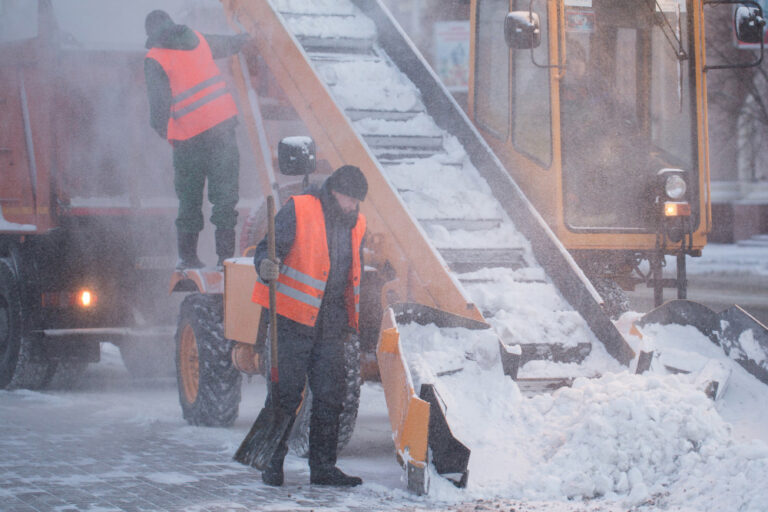
Remove loose snow and ice mechanically before depending on a deicer.
Best when using a deicer:
Choose according to the measured surface temperature, intended surface and documented temperature range.
Best when minimising additional chloride is a priority:
Consider a chloride-free ice melt whose current technical documentation supports the intended temperature and surface.
Best when melting is too slow:
Use a traction approach to improve grip rather than assuming more deicer will solve the temperature limitation.
Related Articles
- At What Temperature Does Salt Stop Melting Ice?
- What Temperature Does Salt Melt Ice?
- Impact of Chemical Ice Melt on Plants
- How to Melt Snow in a Plant-Friendly Way
Conclusion
To answer the initial question, at what temperature does ice melt or at what temperature will ice melt, we come back to the baseline of 0°C. However, the understanding of this process is deeper, considering the environmental and property impacts of the solutions used. With products like Safe Thaw, industries can now approach ice melting in a way that’s effective, safe for the environment, and protective of their assets. It’s a step forward in managing winter conditions responsibly, keeping in mind the well-being of our planet and the integrity of industrial infrastructure.
Try Also Our Other Winter Safety Products
Safe Paw
The Original and #1 Selling Pet and Child Safe Ice Melt for over 20 years. Guaranteed environmentally safe – will not harm waterways and sensitive wetlands. Safe Paw can change how winter affects our planet.

Ice Traction (with Traction Magic™)
Ice Traction is your go-to winter solution for driveways, walkways, parking lots, and even black ice on the road. Unlike salt or ice melts, it delivers instant grip on snow and slippery surfaces with no wait time.
Just spread and go.
Instant Grip. Zero Melt Time.
Total Confidence on Black Ice