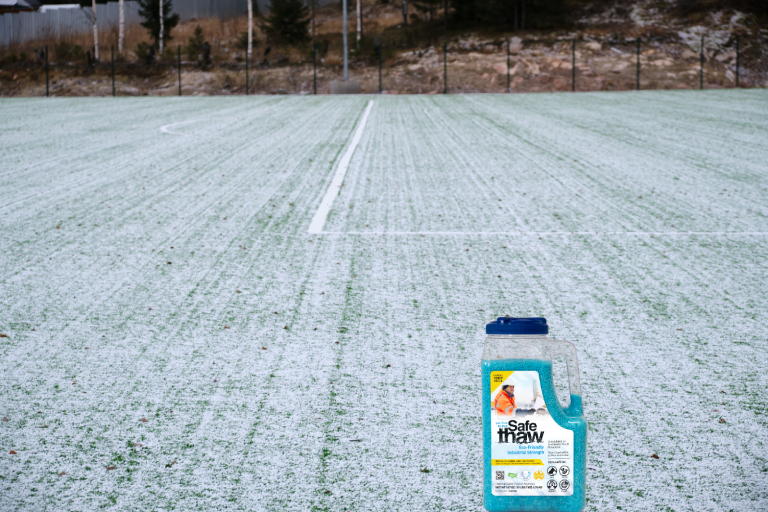
Using salt to melt ice has been a longstanding practice for homeowners and municipalities alike. The basic science is that salt lowers the freezing point of water, causing ice to melt even in freezing temperatures. However, the question often arises, when does salt stop melting ice? And, are there drawbacks to its use? As we delve into these questions, we’ll also introduce a superior alternative – Safe Thaw, a concrete safe ice and snow management solution that you can trust.
The Science Behind Salt And Ice
Salt has the capacity to lower the freezing point of water, a process known as freezing point depression. This property is why salt is often sprinkled on icy surfaces to induce melting and prevent re-freezing. But salt’s effectiveness reduces as temperatures drop below 15°F (-9.4°C), beyond which it fails to prevent ice formation. In such conditions, using salt to melt ice is less efficient and hardly effective.
The Drawbacks Of Using Salt
Despite its common usage, using salt to melt ice carries several significant drawbacks:
- Environmental Impact: Salt can contaminate local bodies of water and harm aquatic life. Additionally, it can seep into the soil, altering its composition and potentially damaging plant life.
- Surface Corrosion: Salt can cause serious damage to concrete and other surfaces. This is particularly true for surfaces with metal reinforcements where salt can accelerate rusting.
- Pet Safety: Salt can be harmful to pets. When walked on, it can cause paw irritation and, if ingested, lead to illness.
- Inefficiency in Extreme Cold: As mentioned earlier, salt becomes ineffective at temperatures below 15°F (-9.4°C).

Safe Thaw
Safe Thaw was created as the ice management solution for tough winter environments. Ideal in commercial and industrial properties, shops, government agencies, bridges, and construction.
Buy NowIntroducing Safe Thaw
Given the limitations and potential harm caused by using salt to melt ice, it’s crucial to consider safer and more effective alternatives. Enter Safe Thaw, a 100% salt-free solution designed to be a superior option for managing ice and snow.
- Safe Chemistry: Safe Thaw is engineered with a patented dual-effect formula that not only breaks the surface tension but also instantly melts ice, speeding up the melting process far beyond what salt can offer.
- 100% People, Pet & Plant Safe: Unlike salt, Safe Thaw is completely safe for all living creatures. It causes no harm to eyes, skin, or paws, and is non-toxic even if ingested.
- Surface Safe: Safe Thaw is 100% safe on all surfaces, including but not limited to decking, concrete (at least 1-year-old), pavers, brick, and stone. It causes no degradation or damage, preserving the integrity of your property.
- Non-Corrosive & Non-Conductive: Safe Thaw is non-corrosive and non-conductive, meaning it won’t cause damage to machinery or equipment, a common issue with salt-based products.
100% Salt & Chloride-Free, Fast-Acting Ice Management Solution
Conclusion
While the use of salt to melt ice is a common practice, understanding when salt stops melting ice and the potential drawbacks of its usage are essential considerations. The harmful impacts on the environment, potential for property damage, and safety issues for pets make salt a less than ideal choice.
In contrast, Safe Thaw offers a superior, safer, and more effective alternative. Its unique formula, along with its safe use for people, pets, plants, and surfaces, ensures that you can effectively manage snow and ice without compromising the safety and integrity of your environment. With Safe Thaw, winter management becomes less about handling harsh chemicals and more about enjoying the beauty of the season.
Try Also Our Other Winter Safety Products
Safe Paw
The Original and #1 Selling Pet and Child Safe Ice Melt for over 20 years. Guaranteed environmentally safe – will not harm waterways and sensitive wetlands. Safe Paw can change how winter affects our planet.

Ice Traction (with Traction Magic™)
Ice Traction is your go-to winter solution for driveways, walkways, parking lots, and even black ice on the road. Unlike salt or ice melts, it delivers instant grip on snow and slippery surfaces with no wait time.
Just spread and go.
Instant Grip. Zero Melt Time.
Total Confidence on Black Ice