No, you should not use just any ice melt on granite steps. Although granite is durable, an unsuitable product or excessive application may leave residue, affect adjacent mortar or metal, and allow moisture to enter joints or existing cracks. Remove loose snow first, select a product whose manufacturer confirms compatibility with exterior natural stone, test it in a small area, apply only the labeled amount, and remove residue after the ice has loosened.
A chloride-free product may reduce chloride-related concerns, but “chloride-free” alone does not prove compatibility with every granite finish, sealer, joint, or installation. Confirm the product guidance and consult the stone installer when uncertain.
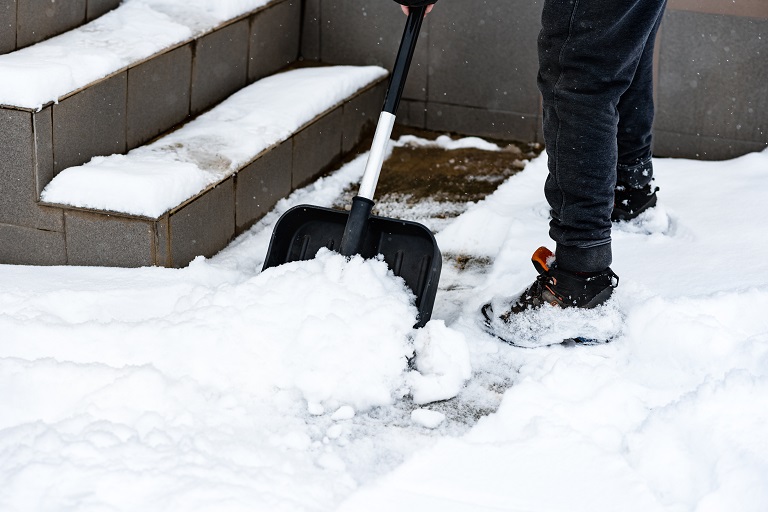
Granite is commonly used for exterior steps because it is durable and visually attractive. However, ice can make polished or smooth-finished granite dangerously slippery. Winter treatment must account for more than the granite itself: sealers, grout, mortar, joints, metal railings, nearby plants, and repeated freeze-thaw cycles may all be affected by moisture and deicing materials.
The safest approach is to clear snow early, use only a product supported for the specific installation, apply the minimum labeled amount, and remove the loosened ice and residue promptly.
Key Takeaways
- Do not assume every ice melt is suitable for granite steps.
- Identify the stone, surface finish, sealer, mortar, and joint condition before treatment.
- Remove snow mechanically before applying a deicer.
- Follow the product label; applying more does not necessarily produce a better result.
- Test the product on a small, inconspicuous area.
- Avoid metal tools, harsh abrasives, and aggressive chopping.
- Remove loosened slush and residue instead of allowing it to refreeze.
- Use a neutral stone cleaner and water for routine cleanup.
- Repair cracks, open joints, and drainage problems before winter.
- Confirm all product-specific safety claims using labels or independent testing.
What Should You Check Before Applying an Ice Melt?
- Whether the material is true granite or another stone sold under a commercial granite name.
- Whether the surface is polished, honed, flamed, brushed, or textured.
- Whether the stone has been sealed.
- Whether the manufacturer permits the product on exterior natural stone.
- Whether the joints, grout, mortar, or surrounding concrete are cracked.
- Whether metal railings, fasteners, plants, or painted surfaces could receive runoff.
- Whether water drains away from the steps or pools and refreezes.
The Benefits of Installing Granite Steps for Home Entries
While we concentrate on concrete or asphalt as our go-to materials for driveways, patios, or steps, there are other materials we can use.
One of the materials gaining popularity amongst several homeowners is granite. Let us take a quick peek into the advantages of using granite for steps.
– They look gorgeous and give an elegant look to the entry of your home.
– They become the focal point of your home’s entry.
– They are stain-resistant and are quick to clean every day.
– They come in visually appealing designs and patterns that are ideal for any home.
– They are one of the sturdiest materials on the market and make a great investment if you are not keen on using concrete.
Every material has its pros and cons, including granite.
What Are The Disadvantages Of Having Granite Steps?
They are great to look at and are easy to clean; however, there are certain elements you must keep in mind.
– They have a smooth finish compared to concrete or asphalt, making them slippery in winters.
– There are high chances of skidding or slipping if you have not applied the best ice melt for granite steps or invested in anti-skid mats.
– High chances of injuring yourself, kids, or pets at home if the steps are not cleared almost every day during winter.
– It may be one of the sturdiest materials on the market, but if a heavy object falls, it can crack or chip.
– You have to replace the entire section and not just a part.

Safe Thaw
Safe Thaw was created as the ice management solution for tough winter environments.
Ideal in commercial and industrial properties, shops, government agencies,
bridges, and construction.
Now that we know the advantages and disadvantages of using granite on steps, the next question is about using the best ice melt for granite steps.
– It is not ok to use any ice melt for granite steps.
– Some blends have a higher concentration of sodium chloride, popularly known as rock salt, making it harsh on your granite steps.
– Salt is abrasive and can remove the sheen and smoothness of your granite steps.
– While calcium chloride ice melt or magnesium chloride ice melt is considered a safe product to use on granite steps, it is not the best ice melt for the environment.
How to Clean Granite Steps and Remove Dangerous Ice Buildup
- Close or mark the area. Prevent people from using the steps while they are icy.
- Remove loose snow. Use a soft-bristle broom or a plastic-edged shovel.
- Avoid forceful chopping. Metal blades and sharp tools can chip the stone or damage joints.
- Inspect the steps. Look for cracks, failed joints, loose stone, or standing water.
- Test the treatment. Apply a small amount in an inconspicuous location first.
- Follow the label. Use only the recommended quantity and application method.
- Allow the ice to loosen. Do not add repeated heavy applications without assessing the result.
- Remove the slush. Sweep or shovel away loosened ice before it refreezes.
- Clean remaining residue. When conditions permit, use clean water and a neutral stone cleaner.
- Dry and reassess. Check for discoloration, film, damaged joints, or recurring drainage problems.
100% Salt & Chloride-Free, Fast-Acting Ice Management Solution
How to Get Rid of Ice on Steps Without Damaging the Stone
To get rid of ice on steps and driveways, a highly efficient ice melt product like Safe Thaw is needed. This ice melt product is safe for concrete and starts working immediately upon application, significantly reducing the risk of accidents due to slippery surfaces.
How to Maintain the Natural Sheen of Your Outdoor Granite
Even after choosing the best ice melt for granite, maintenance doesn’t stop there. The next big question homeowners ask is: how to clean granite steps once the snow and slush are gone? Unlike concrete, granite has a naturally smooth and polished surface, which means any abrasive cleaner or harsh chloride can dull its shine.
The easiest way to keep granite steps looking pristine is to use warm water mixed with a mild, pH-neutral cleaner. A soft-bristle brush or microfiber cloth works best to scrub away dirt without scratching the surface. If you notice salt residue or ice melt dust, rinse thoroughly with clean water to prevent buildup. The key is consistency—cleaning regularly ensures that grime doesn’t settle deep into the pores of the stone. And here’s where Safe Thaw makes things easier: because it doesn’t leave behind a sticky or powdery residue, the cleaning process is faster.
Can You Melt Granite? Debunking Myths About Stone Durability
Now, let’s tackle a question people often ask out of curiosity: can you melt granite? The short answer is no—not in any way that relates to your home patio or steps. Granite is formed under intense heat and pressure deep within the Earth, and while technically it can melt at temperatures above 2200°F, that’s not something you’ll ever encounter outside of a geology lab or volcanic eruption.
So, why does this question matter? Because some homeowners confuse “melting granite” with the surface losing its polish or getting damaged by ice melts. Harsh salts can create pits, dull the finish, or cause micro-cracks that make it look like the stone is breaking down.
How to Clean Outdoor Granite After Winter Salt Exposure
If you’ve made it through the season using a chloride-based product, you may already be seeing the consequences on your steps: cloudy patches, streaks, or dull spots. This brings us to another important question: how to clean outdoor granite when winter’s over?
Start by sweeping away loose debris with a soft broom to avoid scratches. Next, use a mixture of warm water and mild dish soap, applying it with a sponge or soft brush. Rinse thoroughly to wash away any salt or chloride residue. For tougher stains, a granite-safe stone cleaner can be used. Avoid anything acidic, like vinegar or lemon, as these can etch the stone surface permanently.
For long-term care, sealing outdoor granite once or twice a year is a smart move. Sealing helps close the pores of the stone, reducing the chances of salt or water seeping in. Paired with Safe Thaw, this creates a two-layer protection system: the sealant strengthens the stone, while the ice melt ensures no harmful residues undo that protection.
By combining good cleaning habits with a safe deicing product, your granite steps won’t just survive winter—they’ll stay looking like the elegant focal point you installed them to be.

Pros and Cons Table
|
Method |
Advantages |
Limitations |
|
Early snow removal |
Reduces compaction and the amount of deicer required |
Requires timely work; tools must not scratch or chip the stone |
|
Chloride-free ice-management product |
Avoids introducing chloride from the product |
Compatibility still depends on the complete formulation and installation |
|
Sodium chloride/rock salt |
Widely available and inexpensive |
May leave residue and introduce chloride into runoff and adjacent materials |
|
Calcium or magnesium chloride |
Can work under colder conditions, depending on formulation |
May leave residue; compatibility with stone, joints, metal, and landscaping must be verified |
|
Sand or traction granules |
Provides immediate friction |
Usually does not melt ice; may scratch polished surfaces or be tracked indoors |
|
Rubber traction mat |
Provides immediate walking grip |
Can shift, trap moisture, or cover only a limited area |
|
Heated step system |
Reduces recurring ice formation |
Higher installation and operating cost |
|
Professional stone treatment |
Can address texture, sealing, joints, and drainage |
Requires specialist assessment and expense |
Warnings and Limitations
- No ice melt should be described as safe for every granite installation without relevant test evidence.
- A product’s compatibility with concrete does not automatically prove compatibility with granite, grout, mortar, sealers, or metal components.
- “Salt-free,” “chloride-free,” “natural,” and “pet-friendly” describe different properties and are not interchangeable.
- Do not use metal picks, steel shovels, or aggressive scraping tools on stone steps.
- Avoid acidic cleaners, including vinegar and lemon-based products.
- Avoid abrasive powders that can scratch certain stone finishes.
- Do not mix cleaning or ice-management chemicals.
- Do not pour hot water onto frozen steps; it can refreeze and create another hazard.
- Do not allow meltwater to collect in joints or refreeze at the step edge.
- Keep people and animals away during application according to label directions.
- Consult a stone professional if the granite is cracked, loose, historically significant, newly installed, or covered by a warranty.
Comparison Table
|
Treatment |
Primary Purpose |
Granite Consideration |
Cleanup |
|
Mechanical snow removal |
Removes loose snow |
Use non-metal, stone-friendly tools |
Sweep remaining particles |
|
Rock salt |
Melts ice |
Verify effects on the complete installation and nearby materials |
Remove residue and rinse when appropriate |
|
Calcium chloride product |
Melts ice |
Check label, finish, sealer, joints, and metal compatibility |
Residue may require cleaning |
|
Magnesium chloride product |
Melts ice |
Do not assume universal stone compatibility |
Follow product guidance |
|
Chloride-free product |
Ice management, formulation-dependent |
Confirm the entire formulation is suitable for exterior granite |
Follow label directions |
|
Sand or grit |
Adds traction |
May scratch polished stone and does not normally melt ice |
Sweep and collect |
|
Rubber mat |
Adds walking traction |
May trap moisture or move if unsecured |
Lift, clean, and dry |
|
Heated system |
Prevents or melts ice |
Installation should protect stone and joints |
Limited chemical residue |
Recommendations
- Best first step: Early removal with a soft broom or plastic-edged shovel.
- Best for a thin ice layer: A treatment verified for the specific stone installation.
- Best for immediate temporary traction: A compatible non-abrasive traction product or secured rubber mat.
- Best for polished granite: Professional advice, because abrasive particles may affect the finish.
- Best for cracked steps or failed joints: Repair before repeated deicer exposure.
- Best for recurring refreezing: Correct drainage or install a professionally designed heating system.
- Best for residue removal: A neutral stone cleaner, clean water, and a soft brush.
- Best when compatibility is unknown: Test a small area and consult the installer or stone supplier.
Can Granite Steps Be Permanently Damaged by Chemical Deicers?
This brings us back to a bigger concern: can granite be melted or permanently ruined by ice melt? While, as we established, granite won’t literally melt under normal conditions, the wrong products can certainly cause long-term damage. Sodium chloride, for example, can seep into the pores, leaving behind efflorescence (those chalky white deposits) or even contributing to tiny fractures that weaken the stone’s structural integrity over time.
Even calcium chloride or magnesium chloride—often marketed as “gentler” options—can create problems. They may not crack granite as quickly as rock salt, but they often leave behind residues that are tough to clean and can dull the surface. Over repeated winters, this buildup can make granite lose its natural sheen and beauty.
That’s why Safe Thaw is considered the best ice melt for granite—it doesn’t contain any chlorides and is specifically formulated to be non-abrasive. Its dual-action formula melts ice effectively while leaving the stone surface unharmed. It’s like having the best of both worlds: safe traction and protection for your investment.
Why Choosing a Safe Ice Melt for Granite Steps Saves Money
If you’ve ever had to repair cracked granite or polish out stains, you know it’s not cheap. Unlike concrete, where small patches can be filled or resurfaced, granite repairs usually mean replacing entire sections. That can add up quickly, especially if your steps are large or custom-cut.
This is why prevention always wins. Choosing a safe ice melt, cleaning granite properly, and sealing it regularly can save you from costly replacement projects. And when you compare the cost of Safe Thaw to the expense of hiring a mason to fix cracked granite, the choice becomes even clearer.
So, when winter rolls in, it’s not just about surviving icy mornings. It’s about making smart decisions that protect the look, feel, and safety of your home for years to come.
Conclusion: Protecting Your Granite Investment This Winter
Granite steps are a beautiful investment, but winter puts them to the test. Questions like how to clean granite steps, can you melt granite, how to clean outdoor granite, and can granite be melted all point to the same answer: granite itself is strong, but the wrong ice melt can make it look weak.
Safe Thaw solves this problem by giving you effective ice melting without the corrosive side effects of salt and chlorides. It keeps granite safe, prevents stains, and makes cleaning easier once the season ends. In short, it protects your investment while keeping your family and pets safe from slips.
So, this winter, don’t gamble with products that might chip, stain, or dull your steps. Choose prevention over patchwork, and let Safe Thaw keep your granite as timeless as the day you laid it down.
Related Winter Surface Guides
- Why Bluestone Patios Need a Different Ice Melt
- Impact of Chemical Ice Melt on Plants
- How Safe Thaw Works
- Where to Buy Safe Thaw Products
Try Also Our Other Winter Safety Products
Safe Paw
The Original and #1 Selling Pet and Child Safe Ice Melt for over 20 years. Guaranteed environmentally safe – will not harm waterways and sensitive wetlands. Safe Paw can change how winter affects our planet.

Ice Traction (with Traction Magic™)
Ice Traction is your go-to winter solution for driveways, walkways, parking lots, and even black ice on the road. Unlike salt or ice melts, it delivers instant grip on snow and slippery surfaces with no wait time.
Just spread and go.
Instant Grip. Zero Melt Time.
Total Confidence on Black Ice