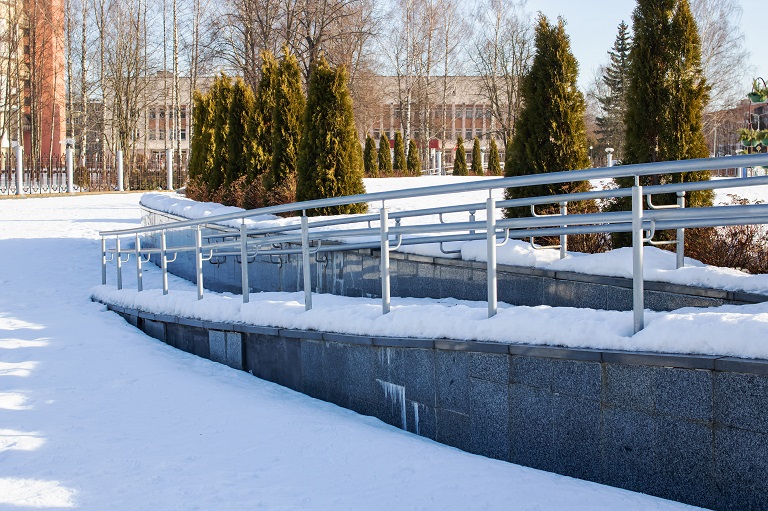
What Should Be Inspected Before Winter?
Inspect the ramp before the first freeze and after severe storms. Look for loose fasteners, movement at connections, damaged welds, bent components, worn traction surfaces, coating damage, blocked drainage openings, and unstable landings. Check that handrails are secure and free from residue.
Surface maintenance cannot correct structural movement or damaged connections. If the ramp shifts, flexes unusually, has damaged supports, or contains sharp or raised components, stop using the affected section until it has been assessed.
Why You Should Avoid Chemical Deicers on Aluminum Surfaces
Avoid chemicals of any kind. If you’re using any chemicals, it’s best to avoid using them on the ramp itself. Chemicals will damage the surface and make it unsafe for vehicles.
What Ice Melt is Safe for Aluminum Ramps and Pet Paws?
Safe Thaw is a safe alternative to traditional deicing products. It’s the best deicer for concrete driveways and works equally well on aluminum ramps. This product contains special surfactants, inhibitors, and ice melting boosters. It’s chemical-free, non-toxic, and environmentally friendly. This means it won’t harm pets or concrete.

Safe Thaw
Safe Thaw was created as the ice management solution for tough winter environments. Ideal in commercial and industrial properties, shops, government agencies, bridges, and construction.
How to Safely Remove Snow from Aluminum Ramps Without Scratching
If you’re using a metal shovel, it’s best to avoid using it on the ramp. The reverse is true—you can use a non-metal shovel without causing any harm to the ramp.
The reason for this is that metal can damage the surface of your aluminum ramp. This could lead to corrosion and discoloration of your ramp, making it harder for you to clean later on down the line.
Common Winter Maintenance Methods for Aluminum Ramps
|
Method |
Advantages |
Limitations |
|
Broom |
Good for light, loose snow; low risk of scratching |
Less effective on compacted snow |
|
Non-metal snow shovel |
Removes deeper snow efficiently |
Must still be used carefully around textured surfaces |
|
Rubber or anti-slip mat |
Adds traction in selected areas |
Does not melt ice; requires cleaning |
|
Chloride-free ice melt |
Helps loosen or melt ice without relying on chloride salts |
Performance depends on formulation and conditions |
|
Sand or grit |
Provides temporary traction |
Does not melt ice and may require cleanup |
|
Hot water |
Can initially loosen ice |
Meltwater can refreeze as temperatures remain below freezing |
Warning And Limitations :
- A traction material does not necessarily melt ice.
- A deicer does not replace snow removal.
- Surface coatings and aluminum alloys differ.
- Thick or compacted ice may require repeated mechanical and deicing steps.
- Standing meltwater can refreeze.
- Product performance varies with temperature, ice thickness, application rate, and surface conditions.
Routine Aluminum Ramp Winter Maintenance
- Sweep loose snow with a stiff broom.
- Use a plastic, polymer, or rubber-edged snow tool for deeper snow.
- Work in the direction that allows snow and meltwater to leave the ramp.
- Remove slush after deicing.
- Keep drainage areas unobstructed.
- Check the surface for scratching or pitting.
- Reapply traction or deicing material only when conditions require it.
Ice Management Options for Aluminum Ramps
|
Option |
Melts Ice? |
Chloride Content |
Traction Benefit |
Aluminum Consideration |
|
Sodium chloride |
Yes |
Chloride-based |
Limited |
Repeated chloride exposure can contribute to corrosion |
|
Calcium chloride |
Yes |
Chloride-based |
Limited |
Material compatibility should be considered |
|
Magnesium chloride |
Yes |
Chloride-based |
Limited |
Material compatibility should be considered |
|
Chloride-free ice melt |
Yes, depending on formulation |
No chloride salts |
Depends on formulation |
Avoids chloride exposure |
|
Sand/grit |
No |
None |
Yes |
Cleanup may be required |
|
Rubber traction mat |
No |
None |
Yes |
Keep clean and securely positioned |
Will a Rubber Mat Help Melt Ice on Aluminum Ramps?
The ramp mat is a rubber mat that you can place on the ramp to keep it from getting slippery. The ramp mat is easy to clean and can be used for other purposes, such as protecting your driveway or patio from water damage. It’s also a good alternative to sand!
The ramp mat comes in different styles and colors, so you’re sure to find one that will fit your needs.
100% Salt & Chloride-Free, Fast-Acting Ice Management Solution
How to Store Aluminum Ramps to Prevent Winter Corrosion
Another thing to remember is to store your ramp in a dry place. Your ramp should never be left outside on the ground, even during the winter months. In fact, it should not be exposed to any moisture at all. If you have a heated garage or basement where you can store your aluminum ramps from November through March, that’s ideal.
How Does a Non-Corrosive Ice Melt Work on Metal Surfaces?
You might be wondering—why do we need a special ice melt for aluminum ramps in the first place? After all, aluminum is strong, durable, and resistant to rust. But here’s the catch: aluminum may not rust like steel, but it can corrode if exposed to harsh chlorides over time. Products loaded with chlorides don’t just attack concrete; they also eat into aluminum surfaces, causing discoloration, pitting, and eventually weakening the ramp’s grip.
That’s why Safe Thaw becomes such an important part of your winter toolkit. Instead of harsh chlorides, it uses a urea-modified formula that’s non-corrosive. It melts ice fast, prevents refreezing, and keeps the aluminum surface intact. Think of it like applying a protective balm—your ramp stays safe while the ice disappears.
And the bonus? Because Safe Thaw is eco-friendly, it’s safe for your landscaping, your pets’ paws, and even your shoes. No more white residue being tracked into the house.
Does Aluminum Melt Ice Naturally? Understanding Thermal Conductivity
A common question homeowners ask is: does aluminum melt ice on its own? The answer is no. Aluminum is a great conductor of heat and cold, which means it takes on the temperature of its environment very quickly. If the ramp is sitting in freezing air, aluminum doesn’t generate warmth—it simply holds the cold, making ice cling stubbornly to the surface.
That’s why depending on the material alone won’t solve the problem. You need an ice melt for aluminum ramps that actively breaks the bond between the surface and the ice. Products like Safe Thaw don’t just sit there; they penetrate the ice, lower the freezing point of water, and create a thin barrier that slows down future buildup.
It’s also why sweeping or shoveling without treatment often feels like a losing battle. You clear one layer, and another forms right after. With a proper deicer, the process shifts in your favor—you’re not just reacting to ice, you’re preventing it.
At What Temperature Does Ice Melt in Celsius on Metal Ramps?
We all know ice melts at 0°C (32°F) under normal conditions, but winter rarely gives us “normal.” Factors like air pressure, impurities in the water, and contact with surfaces change how ice behaves. For ramps, this matters because aluminum often feels colder to the touch than surrounding surfaces, which makes ice stick more stubbornly.
So, while you may think, at what temperature does ice melt in celsius, the real question is: how do you get it to melt when conditions aren’t ideal? That’s where Safe Thaw comes in again. Its formula works in temperatures as low as -23°C (-10°F), which covers most winter conditions you’ll face. Instead of waiting for the sun to help, you can get traction and safety right when you need it.
Knowing this also helps you plan. If the forecast shows temps hovering around freezing, applying a preventative layer on your aluminum ramp before the storm makes it easier to clear later. It’s like priming a surface before painting—it makes the job smoother.
How to Thaw Ice on Aluminum Ramps Safely Without Using Heat
When your ramp is already frozen over, the goal is simple: thaw ice without damaging the surface. Many people instinctively reach for hot water, but that can be risky. The sudden expansion and contraction from hot water on a freezing aluminum ramp can create stress, and worse, it can refreeze quickly into a slicker sheet of ice.
Instead, sprinkle a safe deicer in a thin, even layer. Let the product penetrate for a few minutes, then sweep off the slush with a broom. If the ice is thick, repeat in smaller amounts rather than dumping a large pile all at once. This method prevents residue and makes your ramp safe for immediate use.
For extra grip, you can also pair Safe Thaw with a rubber mat or anti-slip strips. These don’t replace deicers but add another layer of protection, especially in areas with heavy foot traffic. It’s a simple trick that makes your ramp safer for family members, visitors, or anyone who relies on it daily.
100% Salt & Chloride-Free, Fast-Acting Ice Management Solution
Related Articles :
- how chloride-based ice melts affect surfaces
- how to prevent refreezing on walkways
- ice melt temperature limitations
- winter traction versus ice melting
- removing ice without damaging surfaces
- winter maintenance for concrete or metal surfaces
Conclusion: Choosing the Safest Way to Melt Ice on Aluminum Ramps
Aluminum ramps are built to last, but winter can test them in unexpected ways. While the material itself won’t rust like iron, questions like does aluminum melt ice, at what temperature does ice melt in celsius, and how to properly thaw ice show that the real challenge is keeping the surface safe, not the structure itself.
Using the wrong deicer can shorten the life of your ramp, stain its surface, or make it more slippery instead of less. That’s why choosing a chloride-free ice melt for aluminum ramps like Safe Thaw makes all the difference. It clears ice quickly, protects the ramp, and keeps your outdoor spaces safe without the hidden damage of rock salt or chlorides.
So this winter, don’t just scrape and hope. Treat your ramps with the same care you give your driveway or patio. Because when aluminum is paired with the right deicer, it doesn’t just survive winter—it outlasts it.
Try Also Our Other Winter Safety Products
Safe Paw
The Original and #1 Selling Pet and Child Safe Ice Melt for over 20 years. Guaranteed environmentally safe – will not harm waterways and sensitive wetlands. Safe Paw can change how winter affects our planet.

Ice Traction (with Traction Magic™)
Ice Traction is your go-to winter solution for driveways, walkways, parking lots, and even black ice on the road. Unlike salt or ice melts, it delivers instant grip on snow and slippery surfaces with no wait time.
Just spread and go.
Instant Grip. Zero Melt Time.
Total Confidence on Black Ice