 Sourced by Freepik.com
How Can You Melt Ice on a Driveway Without Salt?
To melt or manage driveway ice without rock salt, start by removing loose snow and then choose a method based on whether you need actual melting or additional traction. A chloride-free deicer can melt ice without relying on common chloride salts, while mechanical removal physically clears snow and ice. Sand and other traction materials can improve grip but do not melt ice. The appropriate method also depends on the driveway material, surface condition, temperature, and product instructions.
Quick distinction: Deicing melts or loosens bonded ice. Traction materials improve grip. Mechanical removal physically removes snow or ice. These approaches can be used separately or together.
FHWA distinguishes chemical pavement treatment from sand-based traction strategies, supporting this clearer categorisation. (FHWA Operations)
Key Takeaways
- Rock salt is sodium chloride and works by lowering the freezing point of water.
- Removing snow early reduces the amount of compacted snow and bonded ice that later needs treatment.
- Chloride-free deicers are an option when avoiding chloride-based formulations is a priority.
- Sand and traction materials do not melt ice; their role is to improve grip on slippery surfaces.
- Hot water is not a reliable standalone winter strategy because melted water can refreeze when surfaces remain cold.
- Deicing salts can contribute to chloride runoff and can be associated with deterioration mechanisms affecting concrete under some conditions.
- Avoid describing any ice-management method as universally safe for every driveway. Surface age, condition, material, weather, and application all matter.
EPA documents chloride movement from road-salt runoff into groundwater and surface water, while FHWA documents several mechanisms through which deicing salts can contribute to concrete distress. (NEPIS)
Why is Quick Ice Removal Critical for Driveway Safety and Liability?
Dealing with ice melt on driveways is not just about making it easier for your car to enter or exit your property. It’s also a critical step in ensuring the safety of everyone who may need to use your driveway. The icy surface can be hazardous and lead to slips and falls, which can cause severe injuries.
Does Traditional Road Salt Effectively Melt Ice on Concrete?
Salt is one of the most commonly used substances to tackle ice on driveways. It’s readily available, cost-effective, and, most importantly, it works well in lowering the freezing point of water, preventing it from turning into ice. Sodium chloride, or rock salt, is a go-to choice for many households.
However, as with most solutions, it’s not without drawbacks. Salt for driveways can be corrosive, causing damage to your driveway, particularly if it’s made of concrete. Moreover, runoff from salted driveways can negatively impact surrounding vegetation and infiltrate local water sources.

Safe Thaw
Safe Thaw was created as the ice management solution for tough winter environments. Ideal in commercial and industrial properties, shops, government agencies, bridges, and construction.
Buy NowIn the beginning, you may ask the most frequent, the most vital aspect of every business is its driveway. With several customers and employees frequenting different commercial locations, your driveway has to be hazard-free to ensure free vehicular and pedestrian movement.
Ways to Melt or Manage Driveway Ice Without Rock Salt
1. Remove Snow Before It Compacts
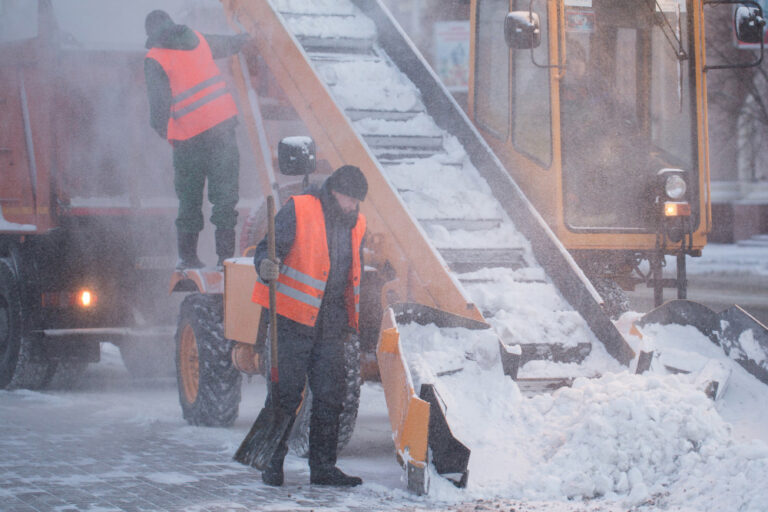
Removing loose snow before it becomes compacted reduces the amount of frozen material that needs to be melted or broken away later. Mechanical removal does not chemically melt ice, but it should form the first stage of most driveway ice-management plans.
2. Use a Chloride-Free Deicer Where Appropriate
A chloride-free deicer avoids sodium chloride, calcium chloride, magnesium chloride, and other chloride-based deicing salts. Performance and surface compatibility vary by formulation, so application instructions and driveway conditions should be checked before use.
3. Use Traction Materials When Melting Is Not Essential
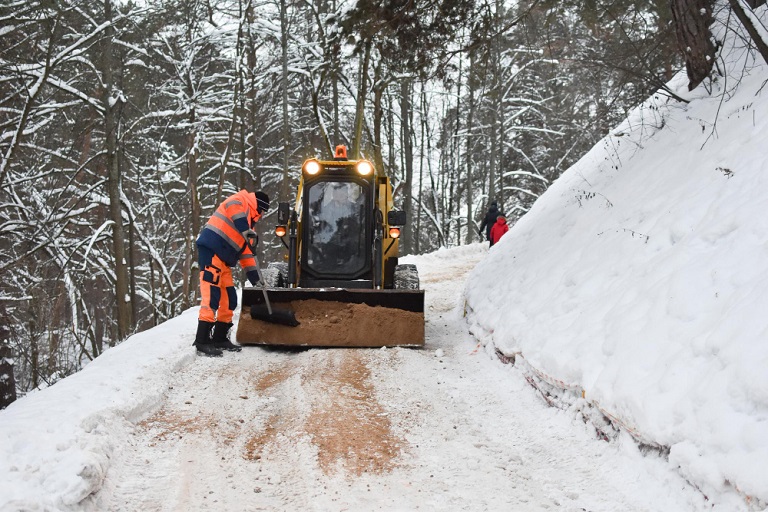
Sand and other traction materials can improve grip on an icy driveway. They do not lower the freezing point or melt the ice, so they should be described as traction methods rather than deicers.
4. Consider Surface-Heating Methods
Heated mats or built-in driveway heating systems can melt ice by transferring heat to the surface rather than using a deicing chemical. Practicality depends on the area being treated, installation, energy use, and local conditions.
5. Physically Remove Loosened Ice
Once ice has loosened, remove it carefully rather than allowing meltwater and slush to remain on the driveway. Avoid presenting aggressive chipping with sharp metal tools as universally appropriate because driveway surfaces and finishes vary.
Repeated exposure to deicing salts can contribute to concrete deterioration under certain moisture, material, and freeze-thaw conditions.
100% Salt & Chloride-Free, Fast-Acting Ice Management Solution
How Rock Salt Works—and Its Limitations
Rock salt (sodium chloride):
- Lowers the freezing point of water and helps form a brine.
- Is widely used for winter pavement treatment.
- Introduces sodium and chloride to runoff.
- Can contribute to increased chloride concentrations in groundwater and surface water.
- Can be associated with deterioration mechanisms in concrete exposed to moisture, deicers, and freeze-thaw conditions.
EPA identifies road-salt runoff as a contributor to chloride in groundwater, and FHWA documents deicer-related concrete distress mechanisms rather than treating all concrete damage as a single simple process. (NEPIS)
Pros and Cons of Salt-Free Driveway Ice Management Methods
|
Method |
Pros |
Limitations |
|
Mechanical snow removal |
No deicing chemical required; removes snow before compaction |
Requires labour; bonded ice may remain |
|
Traction material |
Improves grip quickly |
Does not melt ice; requires cleanup |
|
Chloride-free deicer |
Can melt ice without chloride-based salts |
Performance varies by formulation and temperature |
|
Heated mat/system |
Melts ice without applying a deicing material |
Limited coverage or higher installation/energy requirements |
|
Hot water |
Can melt a thin layer immediately |
Water may refreeze if pavement remains below freezing |
|
Pre-treatment/anti-icing |
Can reduce bonding when an appropriate product is applied before icing |
Timing and product-specific application are important |
Important Limitations Before Treating an Icy Driveway
Not every ice-removal method is appropriate for every driveway. Concrete age, surface condition, porosity, previous repairs, weather, moisture, and product application can all affect results.
Traction is not the same as melting. Sand and similar materials may improve footing but leave the ice in place.
Avoid unnecessary over-application of deicer. More material is not automatically more effective and can increase residue and runoff.
Be cautious with hot water. Water that is not removed may refreeze when pavement temperatures remain below freezing.
Avoid absolute concrete-safety claims. Deicing-related deterioration depends on several interacting factors, including concrete characteristics, moisture, freeze-thaw exposure, and the material applied.
FHWA’s concrete research shows that deicer-related distress involves multiple mechanisms and conditions rather than a simple rule that every salt application necessarily causes identical damage. (Federal Highway Administration)
Winter Maintenance: How to Prepare Your Concrete Driveway for Ice
Preparation can be a game-changer when dealing with ice melt on driveways. Before winter sets in, seal your driveway to prevent water from seeping in. Regularly remove the snow from your driveway to prevent it from compacting and turning into ice.
What is the Best Salt for Concrete Driveway Use? (And Why Salt Fails)
You might be wondering—isn’t regular salt the best salt for concrete driveway maintenance? At first glance, it feels like a logical choice. Rock salt (sodium chloride) is cheap, easy to buy in bulk, and promises quick melting power. But here’s the catch: salt doesn’t just melt ice—it also eats away at your driveway, your landscaping, and sometimes even your car. Every time snow and ice thaw and refreeze, salt accelerates the freeze–thaw cycle, leading to cracks, pits, and long-term surface damage.
That’s why homeowners and facility managers often realize too late that what looked like the best salt for concrete driveway surfaces was actually a recipe for expensive repairs come spring. Salt granules seep into porous concrete, where moisture expands when frozen, causing those spiderweb cracks we’ve all seen. And if you’re running a business, damaged concrete is more than an eyesore—it’s a liability. That’s where a chloride-free product like Safe Thaw stands apart. Instead of corroding surfaces, it leaves behind a protective layer that resists refreezing, reducing how often you need to reapply and cutting down on maintenance costs.
Which Driveway Ice Method Actually Melts Ice?
|
Method |
Melts Ice? |
Improves Traction? |
Adds Chloride? |
Primary Role |
|
Mechanical removal |
No |
Indirectly |
No |
Removes snow/loose ice |
|
Sand |
No |
Yes |
No |
Traction |
|
Chloride-free deicer |
Yes, depending on formulation |
May vary |
No |
Deicing |
|
Surface heating |
Yes |
By removing ice |
No |
Melting/prevention |
|
Hot water |
Temporarily |
No |
No |
Short-term melting |
|
Rock salt |
Yes |
May provide granular grip |
Yes |
Deicing |
How to Get Rid of Ice on a Driveway Without Causing Surface Damage
So, how to get rid of ice on driveway surfaces if salt isn’t the answer? This is where strategy matters. First, preparation goes a long way. Pre-treating your driveway before the snow even falls can save you hours of work later. Products like Safe Thaw create a kind of shield, stopping ice from bonding tightly to the concrete. That means less scraping, less chiseling, and far less frustration when the temperature plunges.
Some people try quick fixes like hot water or kitty litter, but these are temporary and often messy. Hot water melts fast but can quickly refreeze into a slick sheet, making things worse.
The more effective approach is using a driveway deicer specifically designed to penetrate ice and keep it from reforming. Safe Thaw uses a modified carbonyl diamide formula with special glycols, which not only melts the existing ice but also prevents refreezing for up to 72 hours. This means you spend less time reapplying and more time with peace of mind knowing the surface is genuinely safe for vehicles, employees, and family members.
Driveway Deicer Comparison: Identifying High-Performance vs. Gimmick Fixes
Let’s be honest—there are dozens of products out there marketed as the “ultimate driveway deicer.” You’ll see bags boasting calcium chloride, potassium chloride, or blends of salts that promise fast results. While they may melt snow on driveway surfaces quickly, the side effects are what most users don’t see until later. Calcium chloride, for instance, works at lower temperatures than sodium chloride but is highly corrosive. It can etch into concrete, stain floors, and rust machinery or vehicles.
A true driveway deicer should do more than just work in the moment—it should provide protection. That’s where Safe Thaw shifts the narrative. Instead of adding to the damage cycle, it’s non-corrosive, non-conductive, and 100% chloride-free. That means it’s safe around sensitive machinery, won’t interfere with metal ramps, won’t harm decking or pavers, and won’t chew into your asphalt. In fact, Safe Thaw has become the go-to for industrial properties, government facilities, and even airports that simply cannot afford corrosion on equipment or surfaces.
Another overlooked point? Labor and efficiency. If your maintenance team has to apply deicer every few hours because the surface keeps refreezing, you’re wasting time and product. A longer-lasting solution like Safe Thaw actually reduces the total effort needed to keep large areas clear. When scaled across commercial properties or municipal projects, the savings in both manpower and material become significant.
How to Melt Snow on a Driveway with Eco-Friendly Confidence
Every winter, millions of pounds of salt-based deicers end up washing into soil and streams. The environmental cost is staggering: toxic run-off harms aquatic ecosystems, salt alters soil composition making it harder for plants to thrive, and even groundwater can become contaminated. If you’re looking to melt snow on driveway surfaces without adding to this cycle, eco-friendly alternatives are the way forward.
Safe Thaw is not just pet-safe—it’s plant-safe and environmentally responsible. Because it doesn’t contain sodium or magnesium chloride, it won’t leach harmful salts into your landscaping. That means when spring finally rolls around, you won’t find dead grass lines or stunted shrubs along the borders of your driveway. For industrial users, this benefit extends to stormwater compliance and environmental regulations, helping organizations meet sustainability goals while keeping properties hazard-free.
For homeowners, there’s an added peace of mind knowing you don’t have to choose between safety and sustainability. You can melt snow on driveway areas confidently, without worrying that your pet’s paws will burn or that residue will be tracked into the house. And because the formula uses solar-assisted melting, daylight actually boosts its effectiveness, reducing the need for excessive application.

Long-Term Driveway Protection
Ultimately, dealing with ice isn’t just about one storm—it’s about long-term driveway health. Every decision you make in winter impacts how your property looks and functions in spring and beyond. Choosing the wrong deicer may save you a few dollars today but cost thousands in repairs tomorrow. Cracks, corrosion, landscaping damage, and rusted equipment all trace back to the same source: corrosive ice melts.
And that’s the core reason Safe Thaw continues to gain traction across the US—it’s not just about melting ice, it’s about protecting everything that ice touches: the driveway, the environment, your pets, your car, and your bottom line.
So, if you’ve been struggling with the question of how to melt ice on driveway without salt, the real answer isn’t to search for the “best salt for concrete driveway.” It’s to stop relying on salt altogether and move toward chloride-free solutions that combine performance with protection.
Related Articles
- How to Stop Ice From Sticking to Your Concrete Driveway
- How to Use Ice Melt Without Causing Damage to Your Driveway
- Best Way to Apply Ice Melt on the Driveway
- At What Temperature Does Salt Stop Melting Ice?
- Impact of Chemical Ice Melt on Plants
Conclusion: Protecting Your Infrastructure with a Salt-Free Strategy
Dealing with winter ice doesn’t have to be a cycle of damage, repair, and frustration. You don’t need to settle for salt that corrodes concrete or gimmicks that offer only temporary relief. By shifting your perspective—from asking what’s the best salt for concrete driveway? to asking what’s the safest, longest-lasting way to melt snow on driveway surfaces?—you’ll find that the solution has been there all along. Safe Thaw’s innovative, non-toxic, and chloride-free formula isn’t just an ice melt; it’s a long-term investment in safety, sustainability, and peace of mind.
Try Also Our Other Winter Safety Products
Safe Paw
The Original and #1 Selling Pet and Child Safe Ice Melt for over 20 years. Guaranteed environmentally safe – will not harm waterways and sensitive wetlands. Safe Paw can change how winter affects our planet.

Ice Traction (with Traction Magic™)
Ice Traction is your go-to winter solution for driveways, walkways, parking lots, and even black ice on the road. Unlike salt or ice melts, it delivers instant grip on snow and slippery surfaces with no wait time.
Just spread and go.
Instant Grip. Zero Melt Time.
Total Confidence on Black Ice