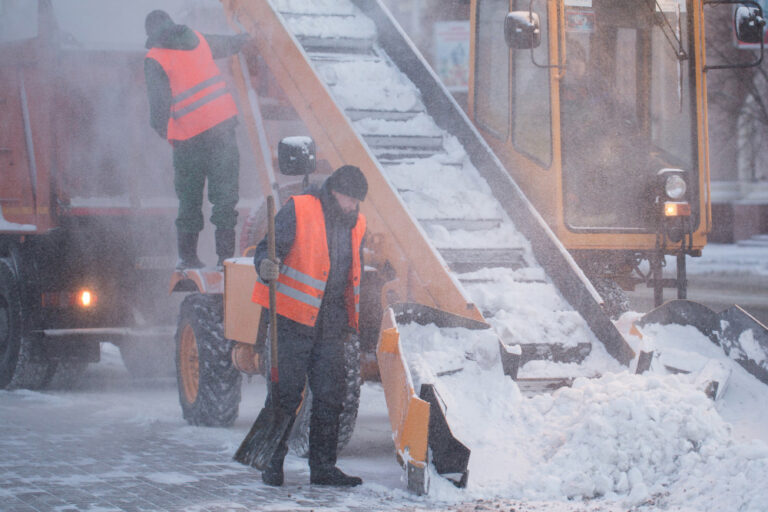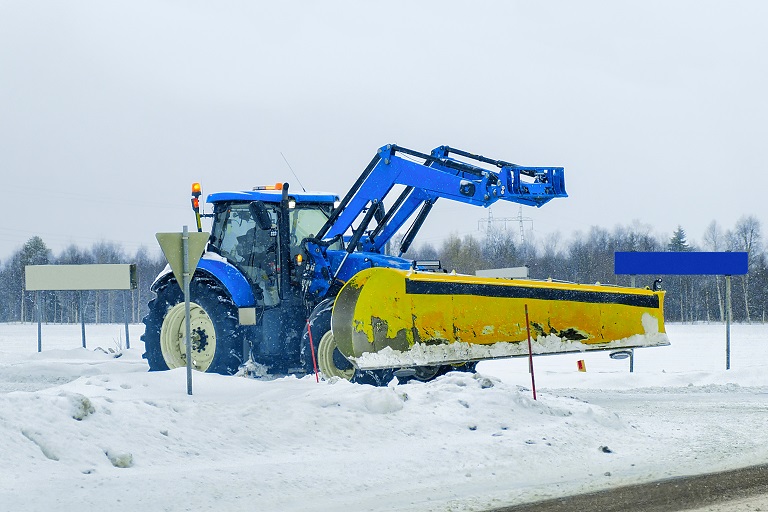
Yes, but the choice of material and application method matters. Exposed aggregate is a concrete surface, so repeated moisture, freezing, thawing, and exposure to chloride-based deicers can contribute to surface scaling or deterioration. Remove loose snow first, use only the amount directed on the product label, and clear remaining slush after the ice loosens. For new, damaged, or previously scaled concrete, prioritize mechanical snow removal and a traction agent, and confirm the surface-specific guidance with the installer.
What Is an Exposed Aggregate Driveway?
An exposed aggregate driveway is a concrete driveway in which stones or other decorative aggregate are visible at the surface. The aggregate is embedded in a cement-based concrete matrix; it is not simply a layer of loose crushed stone. Surface durability varies according to the concrete mixture, finishing, curing, drainage, sealer condition, existing damage, and local freeze-thaw exposure.
Key Takeaways
- Exposed aggregate is concrete and can experience scaling during repeated freeze-thaw cycles.
- Shoveling or plowing loose snow should be the first step.
- Sodium chloride, calcium chloride, and magnesium chloride are all chloride-based deicers.
- Use deicer sparingly and follow its surface and temperature instructions.
- Remove loosened ice and slush instead of allowing concentrated residue to remain.
- Use a traction agent when melting is unsuitable, especially on new or visibly damaged concrete.
- Check the installer’s curing and winter-maintenance instructions before treating a recently placed driveway.
How Winter Conditions Can Affect Exposed Aggregate
Concrete contains pores that can absorb moisture. When sufficiently saturated concrete undergoes repeated freezing and thawing, pressure within the material can contribute to scaling and other deterioration. Deicing salts can intensify surface-scaling mechanisms under some conditions, although concrete quality, curing, air entrainment, drainage, and previous damage also influence the outcome.
How to Deice an Aggregate Driveway
- Remove loose snow with a shovel, broom, or correctly adjusted snow-removal equipment.
- Inspect the surface for scaling, loose stones, cracks, or failed sealer.
- Read the product label for surface restrictions and effective-temperature information.
- Apply only the specified quantity to icy areas.
- Allow the material time to loosen the ice.
- Remove the loosened ice and slush.
- Sweep away remaining granules when conditions permit.
- Reassess drainage and refreezing areas before applying more material.
De-icing an aggregate driveway that is less than 1 year old
If your aggregate driveway is new, the water will seep into the concrete and freeze. This can create a dangerous situation for anyone who walks over that section of your driveway. It’s also important to note that aggregate driveways are not sealed surfaces. While they do have a sealer on them, which keeps dirt and other things out of the concrete, it doesn’t keep out moisture as regular concrete does.
100% Salt & Chloride-Free, Fast-Acting Ice Management Solution
Why Limit Chloride-Based Deicers on Aggregate Concrete?
Chloride-based deicers include sodium chloride, calcium chloride, and magnesium chloride. Repeated or excessive application may contribute to:
- surface scaling during freeze-thaw exposure
- moisture and salt movement into concrete pores
- corrosion risk where reinforced concrete contains embedded metal
- residue on adjacent floors and surfaces
- chloride accumulation in nearby soil and water
- stress on salt-sensitive vegetation
Pros and Cons
|
Method |
Potential advantages |
Limitations |
|
Shoveling or sweeping |
Removes snow without adding deicer residue |
Requires effort and timely removal; tools must not scrape or chip the surface |
|
Snow blower |
Efficient for larger areas |
Incorrect adjustment can contact or damage an uneven surface |
|
Chloride-based deicer |
Can loosen bonded ice within its working-temperature range |
May contribute to scaling, chloride runoff, residue, and corrosion concerns |
|
Chloride-free ice melt |
Avoids adding chloride salts |
Surface compatibility and performance still depend on formulation, temperature, dose, and concrete condition |
|
Traction agent |
Improves grip without needing to melt ice |
Does not remove ice and may require cleanup |
|
Heated surface system |
Reduces manual deicing |
High installation and operating cost; generally requires advance planning |
Warnings and Limitations
New concrete: Do not assume that every driveway becomes ready for deicer use at exactly one year. Concrete mixture, curing, finishing, weather exposure, and installer instructions vary. Confirm the recommended waiting period with the installer or concrete professional.
Existing damage: Avoid applying deicer to visibly scaled, cracked, poorly drained, or deteriorated areas until the condition has been assessed.
Sealers: A sealer may reduce moisture entry, but it does not make concrete waterproof. Verify that the sealer is compatible with the chosen winter-maintenance material.
Temperature: A product may become less effective below its stated working range. Applying more material does not necessarily restore performance.
Traction: An ice melt loosens ice but does not guarantee a slip-free surface. Remove slush and monitor refreezing.
Product claims: Do not describe a formulation as safe for every pet, person, surface, or environmental condition unless that precise claim is supported by relevant testing.
100% Salt & Chloride-Free, Fast-Acting Ice Management Solution
Why you should not use chemical ice melt on the aggregate driveway?
While the chemical ice melts may seem like a quick and easy solution, they can actually damage your driveway. The chemicals found in these products can be harmful if they come into contact with your skin or breathe in when used indoors (i.e., inside your home). Moreover, chemical ice melts are more expensive than rock salt. Chemical Ice Melts are unsafe for children and pets.
Comparing Deicing and Traction Materials
|
Material or method |
Primary function |
Contains chloride? |
Melts ice? |
Main consideration for aggregate concrete |
|
Sodium chloride |
Deicing |
Yes |
Yes |
Repeated exposure can contribute to scaling and chloride accumulation |
|
Calcium chloride |
Deicing |
Yes |
Yes |
Generates heat while dissolving; still adds chloride |
|
Magnesium chloride |
Deicing |
Yes |
Yes |
Still a chloride-based material despite different performance characteristics |
|
Chloride-free ice melt |
Deicing |
No |
Formulation-dependent |
Check ingredients, label directions, temperature range, and surface compatibility |
|
Traction agent |
Adds grip |
Product-dependent |
Usually no |
Useful when melting is unsuitable; requires later cleanup |
|
Mechanical removal |
Removes snow or ice |
No |
No |
Reduces reliance on deicers but requires suitable tools and timing |
Use Chemical-Free Best Ice Melt for Aggregate Driveway Ice Melt
Safe Thaw Ice Melt by Gaia is a safe alternative to traditional deicing products. It’s the best concrete-safe ice melt as it is chemical-free, non-toxic, and environmentally friendly. This means it won’t harm pets or concrete. This product contains special surfactants, inhibitors, and ice melting boosters. The result? A faster way to get rid of pesky winter accumulation so you can spend less time scraping away at your driveway and more time enjoying your home!

Conclusion
We hope you’ve found this information helpful and know how to care for your aggregate driveway. The best way to melt ice on your aggregate driveway is by using safe alternatives that are environmentally friendly and will not harm your driveway.
Related Article Links
- Can SafeThaw Damage Well-Sealed Concrete?
- Why Concrete Scaling or Popping Happens
- How to Improve Traction on Steep Driveways
- How to Remove Ice Without Overapplying Deicer
- Ice Melt vs. Traction Agent: What Is the Difference?