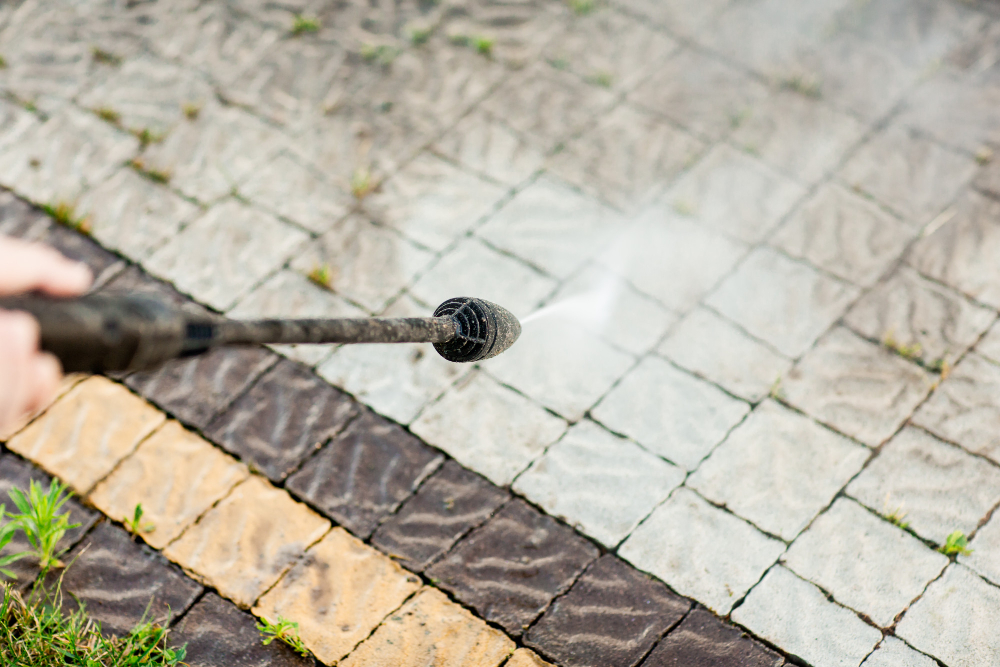
Dealing with oil spills on concrete can be frustrating, but with some simple DIY solutions, you can effectively tackle this problem. Here’s a guide on how to clean oil from concrete, using readily available household items. These methods also offer insights on how to remove oil from concrete, helping to maintain the appearance and longevity of your concrete surfaces.
How Do You Clean Oil From Concrete?
For a fresh oil spill, absorb as much oil as possible before washing the concrete. For remaining stains, use a grease-cutting detergent or a concrete-compatible degreaser, scrub with a stiff nylon brush, rinse, and repeat if necessary. Older stains may require a stronger concrete cleaner, a poultice-style treatment, or carefully controlled pressure washing.
The best method depends on whether the stain is fresh or set in, whether the concrete is sealed, and how deeply the oil has penetrated.
The American Cement Association specifically notes that stain-removal methods should be selected by stain type and that a degreaser may work on an oil stain. (American Cement Association)
Key Takeaways
- Treat fresh oil spills before the oil penetrates further into porous concrete.
- Remove excess liquid with an absorbent material before adding water.
- Mild detergent and water are appropriate first-line options for many light stains.
- A concrete-compatible degreaser is more suitable for stubborn grease and oil contamination.
- Test stronger cleaning methods on a small area first, especially on decorative, coloured, sealed or previously treated concrete.
- Older stains may need repeated treatment rather than one aggressive cleaning attempt.
- Keep oily wash water and loosened residue from spreading into surrounding areas.
EPA describes sorbents as materials used to recover oil through absorption or adsorption, while current concrete-industry guidance recommends selecting the cleaning method according to the stain type. (US EPA)
Before You Clean: Identify the Type of Oil Stain
Fresh Spill
If liquid oil is still sitting on the surface, begin by absorbing and removing as much of it as possible. Adding water immediately can spread the contamination instead of removing the bulk of the oil.
Recent Stain
If the free oil has been removed but a dark mark remains, begin with detergent and mechanical scrubbing before moving to a stronger concrete-compatible cleaner.
Older or Deeply Absorbed Stain
Concrete is porous, so oil can move below the immediate surface. Older stains may require repeated cleaning, a purpose-made degreaser, a poultice-style treatment, or controlled mechanical cleaning.
The National Park Service notes that concrete is porous and that oil contamination can stain and enter porous materials. (National Park Service)
Sealed vs Unsealed Concrete
Cleaning behaviour can differ between sealed and unsealed concrete. If the surface is decorative, coloured, coated or sealed, check the relevant care instructions before using acidic cleaners, strong degreasers or high-pressure washing.
Best Oil-Stain Cleaning Method by Stain Condition
|
Stain Condition |
First Method to Try |
If It Remains |
Main Consideration |
|
Fresh liquid spill |
Absorbent material |
Dish detergent |
Remove free oil before wet cleaning |
|
Light recent stain |
Dish detergent + water |
Baking soda or concrete cleaner |
Repeat before escalating |
|
Moderate set-in stain |
Concrete-compatible degreaser |
Repeat treatment |
Follow cleaner/surface instructions |
|
Old localized stain |
Degreaser or poultice |
Specialist cleaning |
Oil may have penetrated the pores |
|
Large persistent area |
Pretreatment + controlled pressure cleaning |
Professional assessment |
Avoid unnecessarily high pressure |
|
Decorative/sealed concrete |
Surface-specific care guidance |
Specialist cleaner |
Avoid altering finish or coating |
Use Absorbent Materials For Fresh Spills
1. Use an Absorbent Material for a Fresh Spill
Best for: Fresh liquid oil that has not fully soaked into the concrete.
- Cover the spill with a suitable absorbent material.
- Allow time for the material to take up the free oil.
- Sweep or collect the oil-soaked material.
- Repeat if liquid oil remains.
- Follow with a detergent or concrete-cleaning method for the residual stain.
EPA recognizes absorbent and adsorbent materials as standard approaches for recovering oil. (US EPA)
For dish soap:
2. Scrub With Dish Soap and Water
Best for: Smaller or relatively recent oily marks.
- Apply diluted grease-cutting dish detergent.
- Work it into the stain with a stiff nylon brush.
- Allow a short contact period.
- Scrub again.
- Rinse thoroughly.
- Allow the concrete to dry before deciding whether another treatment is needed.
QUIKRETE recommends liquid dishwashing detergent with water and a stiff nylon brush for lighter concrete dirt and stains. (Quikrete)

Safe Thaw
Safe Thaw was created as the ice management solution for tough winter environments. Ideal in commercial and industrial properties, shops, government agencies, bridges, and construction.
Buy Now3. Create A Baking Soda Paste
Baking soda is another excellent DIY solution for how to clean oil from concrete. Make a paste by mixing baking soda with water, apply it to the stain, and let it sit for a few hours. Scrub with a brush, then rinse off. Baking soda is particularly effective on smaller, newer stains.
4. Apply A Degreaser
For tougher stains, a homemade degreaser can be the answer to how to remove oil from concrete. Mix vinegar and water in equal parts, apply it to the stain, let it sit, then scrub and rinse. Vinegar’s acidic nature helps break down the oil.
5. Use Laundry Detergent
Laundry detergents, especially ones designed to treat grease stains, can be effective in how to clean oil from concrete. Sprinkle powdered detergent on the stain, add water to form a paste, scrub with a brush, and rinse off.
100% Salt & Chloride-Free, Fast-Acting Ice Management Solution
6. Try A Cola Treatment
Surprisingly, cola can also be used for how to remove oil from concrete. Pour cola over the stained area, let it sit overnight, and scrub the area with a brush in the morning before rinsing. The acidity in cola helps break down the oil.
7. Hydrogen Peroxide For Deep Stains
For deeper oil stains, hydrogen peroxide can be effective. Pour it over the stain, let it fizz, and sit for a few minutes, then scrub and rinse. This method is best for older or more stubborn stains.
Pros and Limitations of DIY Oil-Stain Cleaning Methods
|
Method |
Advantages |
Limitations |
Most Suitable For |
|
Absorbent material |
Removes free oil before washing |
Does not necessarily remove the remaining discoloration |
Fresh spills |
|
Dish detergent |
Simple first-line cleaning method |
May require repeated scrubbing |
Light or recent stains |
|
Baking soda |
Can function as an absorbent/paste |
Results vary on deeply absorbed oil |
Small or recent marks |
|
Concrete-compatible degreaser |
Designed to break down grease and oil |
Must match the surface and be used as directed |
Persistent stains |
|
Laundry detergent |
Surfactants can help disperse oily residue |
Not specifically formulated for every concrete finish |
Light-to-moderate stains |
|
Poultice treatment |
Can draw material from porous surfaces |
Slower and more involved |
Older localized stains |
|
Controlled pressure cleaning |
Useful over larger areas after pretreatment |
Excessive pressure can affect the surface |
Large persistent stains |
Concrete-industry sources support the use of detergent, degreasers and pressure cleaning depending on stain severity, while GSA guidance recommends beginning masonry cleaning with the least aggressive effective method. (American Cement Association)
Important Limitations Before Cleaning Oil From Concrete
Not every dark stain can be removed completely. Oil that has penetrated deeply into porous concrete may leave residual discoloration after surface cleaning.
Start with the least aggressive suitable method. Strong cleaning agents, acids, wire brushes and excessive pressure can alter some concrete surfaces.
Decorative, sealed or coated concrete needs extra care. Test the method on a small, inconspicuous section first and check the applicable surface-care guidance.
Do not assume that an acidic household liquid is automatically a better degreaser. Oil removal generally benefits from absorption, surfactant action or a purpose-made degreasing treatment.
Prevent contaminated runoff from spreading. Where practical, collect oily residue and absorbent material instead of simply washing contamination into adjacent areas.
GSA’s current masonry guidance recommends starting with the mildest, least-abrasive cleaning method and warns that commercial pressure-washing systems may operate above pressures suitable for sensitive masonry. (U.S. General Services Administration) EPA also treats collection and recovery of oil-loaded sorbents as part of the cleanup process. (US EPA)
The Negative Impact Of Salt And Chloride-Based Ice Melts
While focusing on how to clean oil from concrete, it’s also essential to consider the impact of using salt and chloride-based ice melts on concrete surfaces. These products can increase the porosity of concrete, making it more susceptible to oil stains and other types of damage.
Safe Thaw: A Safer Alternative For Ice Control
Safe Thaw offers a chloride-free and toxin-free alternative for ice control, which is non-corrosive and safe for concrete surfaces. Using Safe Thaw reduces the risk of concrete damage, ensuring that your driveway remains in good condition and reducing the frequency of having to clean oil from concrete. Its environmentally friendly formula is safe for pets, plants, and humans, making it an ideal choice for residential use.

Related Articles
- how to assess and clean an oil stain
- step-by-step driveway oil stain removal
- concrete cleaning and maintenance tips
Conclusion
Cleaning oil from concrete doesn’t have to be a daunting task. By using these simple DIY solutions, you can effectively tackle oil stains and keep your concrete surfaces looking clean and well-maintained. Additionally, using eco-friendly products like Safe Thaw for ice control can help protect your concrete surfaces from damage, ensuring they remain in top condition for longer.
Try Also Our Other Winter Safety Products
Safe Paw
The Original and #1 Selling Pet and Child Safe Ice Melt for over 20 years. Guaranteed environmentally safe – will not harm waterways and sensitive wetlands. Safe Paw can change how winter affects our planet.

Ice Traction (with Traction Magic™)
Ice Traction is your go-to winter solution for driveways, walkways, parking lots, and even black ice on the road. Unlike salt or ice melts, it delivers instant grip on snow and slippery surfaces with no wait time.
Just spread and go.
Instant Grip. Zero Melt Time.
Total Confidence on Black Ice