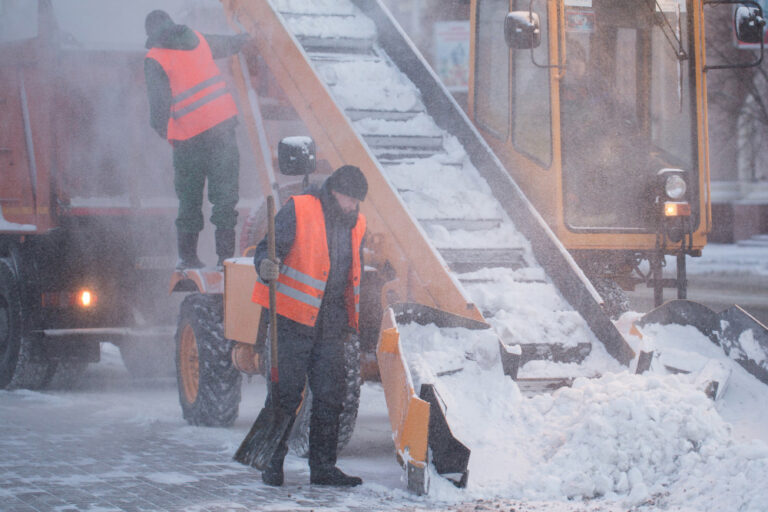
A concrete-safe winter treatment should reduce ice without unnecessarily increasing chloride exposure, moisture penetration, or freeze-thaw stress. Chloride-free ice melt and calcium magnesium acetate are melting options to consider, while sand and purpose-made traction agents improve grip without melting ice. Beet-based products are generally additives or blended deicers rather than standalone beet juice. Coffee grounds should not be treated as an ice melter, and conventional chloride salts require caution on concrete.
Remove snow mechanically before applying any product, follow its label, use only the recommended amount, and clear loosened ice and residue after treatment. Avoid applying ice melt to concrete less than 12 months old; use a traction-only method such as Ice Traction or Walk On Ice instead.
Safe Thaw: The Driveway Guardian
First on our list is Safe Thaw, the superhero of ice melters. This product is like that friend who always has your back – reliable, trustworthy, and never lets you down. It’s the ultimate safe ice melter for concrete, boasting a chloride-free and toxin-free resume. This means it won’t play the villain to your driveway, pets, plants, or property. Its secret weapon? A patented formula featuring a modified crystalline amide core with a special glycol mixture. It’s like having the latest tech gadget that’s super cool and actually works.
Key Takeaways
- Chloride-free deicers and CMA avoid adding chloride to the driveway, but their performance, application rates, and costs differ.
- Sand and traction agents improve grip but do not melt or remove ice.
- Beet juice is normally used as an additive in a deicing blend, not as a standalone driveway treatment.
- Coffee grounds do not melt ice and can create residue; caffeinated grounds should be kept away from pets.
- Sodium, magnesium, calcium, and potassium chlorides should not be grouped as equally safe for concrete.
- Shovel or scrape first, apply only the amount stated on the label, and remove loosened slush.
- For concrete less than 12 months old, avoid ice melt and use a traction-only approach.
How Deicers Can Affect Concrete
Ice-control materials do not all affect concrete in the same way. Water can enter concrete pores and expand when it freezes, contributing to scaling or cracking. Chloride exposure can also contribute to corrosion where reinforced concrete contains embedded steel. Concrete quality, age, drainage, sealing, weather, application rate, and repeated exposure all influence the outcome.
Pros and Cons
|
Option |
Pros |
Cons |
|
SafeThaw |
Chloride-free; melts ice; combines deicing with traction components |
Follow label limits; not for concrete less than 12 months old; substantiate performance claims with product data |
|
Beet-based blend |
May reduce the amount of conventional salt required in a blend; can support lower-temperature application |
Usually contains another deicer; may stain or leave organic residue; composition varies |
|
Calcium magnesium acetate |
Chloride-free; comparatively low corrosion potential |
Generally costs more; performance becomes limited in colder conditions |
|
Coffee grounds |
Reuses a household material; may add limited texture |
Does not melt ice; can stain or create residue; caffeinated grounds present an ingestion concern for pets |
|
Sand |
Improves short-term grip; does not chemically melt ice |
Does not remove ice; can be tracked indoors, create dust, and enter drainage systems |
|
Traditional chloride salts |
Melt ice and are widely available |
Add chloride; may contribute to concrete, metal, vegetation, soil, and water-quality concerns |
Warnings and Limitations
- No ice-control product can prevent damage caused by weak, cracked, improperly cured, or poorly drained concrete.
- Do not use ice melt on concrete less than 12 months old.
- “Concrete-safe” should not be interpreted as permission to overapply a product.
- Remove snow before using a deicer; applying deicer to deep snow wastes material.
- Products marketed as beet-based may still contain chloride salts. Check the full ingredient or safety documentation.
- Sand and traction agents reduce slipperiness but do not eliminate the underlying ice.
- Keep used coffee grounds away from pets because coffee and caffeine can be harmful if ingested. The ASPCA identifies coffee and caffeine as foods pets should not consume.
- Avoid categorical claims such as “cannot damage concrete” unless they are supported by relevant testing and clearly defined conditions.
How to Apply Driveway Ice Control
- Remove loose snow with a shovel or snow blower.
- Break up thick bonded ice where this can be done without damaging the surface.
- Read the product label and confirm its stated pavement-temperature range.
- Apply a thin, even layer rather than leaving piles.
- Allow the material time to work.
- Remove loosened ice, slush, and excess granules.
- Store the remaining material in a dry, closed container.
New and Decorative Concrete
Do not apply ice melt to concrete less than 12 months old. Use a traction-only material such as Ice Traction or Walk On Ice during the first winter. For stamped, colored, coated, cracked, or unsealed concrete, check the surface installer’s maintenance instructions and test the chosen material on a small, inconspicuous area.
Beet Juice Mixtures: The Quirky Eco-Warrior
Now, let’s talk about beet juice mixtures. Beet juice mixes might sound like a hip, eco-friendly choice, but they’re a bit like that trendy diet everyone tries and then quietly quits. Sure, they’re kinder to your driveway than the harsh stuff, but they can be messy and not quite as effective. It’s like choosing a biodegradable straw that dissolves in your drink – good effort, but not quite there.

Safe Thaw
Safe Thaw was created as the ice management solution for tough winter environments. Ideal in commercial and industrial properties, shops, government agencies, bridges, and construction.
Buy NowCalcium Magnesium Acetate (CMA): The Gentle Giant
Next up is Calcium Magnesium Acetate, or CMA. Picture a well-meaning, gentle product that just doesn’t pack enough punch. It’s like a polite guest at a party who doesn’t really mingle. Yes, it’s a safe ice melter for concrete, but it’s also slow and can put a dent in your wallet. It’s like splurging on a luxury car that doesn’t go over 30 mph.
Coffee Grounds: The DIY Hack
For a DIY twist, consider coffee grounds. While they’re not going to melt ice, they provide traction and are a green choice. Sprinkling coffee grounds is like wearing those DIY knitted mittens from grandma – not a professional solution, but they offer a homemade touch. Again it is not good for your paw friends and children. If licked by your pets it can cause heartburn, stomach upset, increased bowel movements, sleep problems, and anxiety in children as well as pets. So choose wisely.
100% Salt & Chloride-Free, Fast-Acting Ice Management Solution
Sand: The No-Frills Traction King
Sand is the old reliable of ice management. It won’t melt anything, but it’ll give you the grip you need for some time creating a huge mess to clean your driveway to clean. It’s like those classic, no-nonsense winter boots – they’re not fancy, and they cannot work efficiently for anyone to not fall.
Comparison Table
|
Option |
Category |
Melts ice? |
Adds chloride? |
Primary role |
Important limitation |
|
SafeThaw |
Chloride-free deicer |
Yes |
No |
Melting and surface traction |
Follow product directions; avoid on concrete under 12 months old |
|
Beet-based mixture |
Deicer additive or blend |
Depends on formulation |
Often |
Improves a blended deicer |
Not necessarily chloride-free; may leave residue |
|
CMA |
Acetate deicer |
Yes |
No |
Lower-corrosion deicing |
Higher cost; reduced cold-weather effectiveness |
|
Coffee grounds |
Household abrasive |
No |
No |
Limited surface texture |
Messy, inconsistent, and unsuitable around pets |
|
Sand |
Abrasive |
No |
No |
Temporary traction |
Requires cleanup and may affect drainage |
|
Sodium, magnesium, calcium, or potassium chloride |
Chloride deicer |
Yes |
Yes |
Ice melting |
Concrete, corrosion, plant, and runoff concerns |
Traditional Salts: The Not-So-Good Old Days
Traditional salts – think sodium chloride, magnesium chloride, potassium chloride – are the equivalent of using a sledgehammer to crack a nut. They’re effective, sure, but they can be a nightmare for your concrete driveway, leading to cracks and damage. It’s like those old-school, heavy winter coats – they keep you warm but are bulky and can wear you down.
100% Salt & Chloride-Free, Fast-Acting Ice Management Solution
Wrapping It Up: Your Winter Game Plan
When choosing a concrete safe I c e melt, think of it as planning your winter strategy. Safe Thaw is the clear winner here, I like investing in a high-quality winter coat that’s both stylish and practical. It keeps your driveway clear without any of the nasty side effects associated with harsher alternatives. So, this winter, arm yourself with the right tools and say goodbye to ice-related woes. Your driveway (and your back) will thank you!
Related Article Links
- New Concrete? Read This Before Applying Any Salt or Ice Melt
Anchor context: guidance for concrete less than 12 months old. - Best Way to Apply Ice Melt on a Driveway
Anchor context: application and cleanup steps. - How to Protect a Concrete Driveway From Salt Damage
Anchor context: prevention, maintenance, and concrete inspection.
Try Also Our Other Winter Safety Products
Safe Paw
The Original and #1 Selling Pet and Child Safe Ice Melt for over 20 years. Guaranteed environmentally safe – will not harm waterways and sensitive wetlands. Safe Paw can change how winter affects our planet.

Ice Traction (with Traction Magic™)
Ice Traction is your go-to winter solution for driveways, walkways, parking lots, and even black ice on the road. Unlike salt or ice melts, it delivers instant grip on snow and slippery surfaces with no wait time.
Just spread and go.
Instant Grip. Zero Melt Time.
Total Confidence on Black Ice