The best concrete-safe ice melt is a 100% chloride-free, non-corrosive formula such as Safe Thaw. Rock salt, calcium chloride, and magnesium chloride can melt ice quickly but may increase scaling, cracking, moisture absorption, and freeze-thaw damage on concrete. For driveways, walkways, steps, and commercial surfaces, choose a chloride-free deicer, apply only as directed, remove slush after melting, and avoid harsh salts on new, cracked, decorative, or poorly sealed concrete.
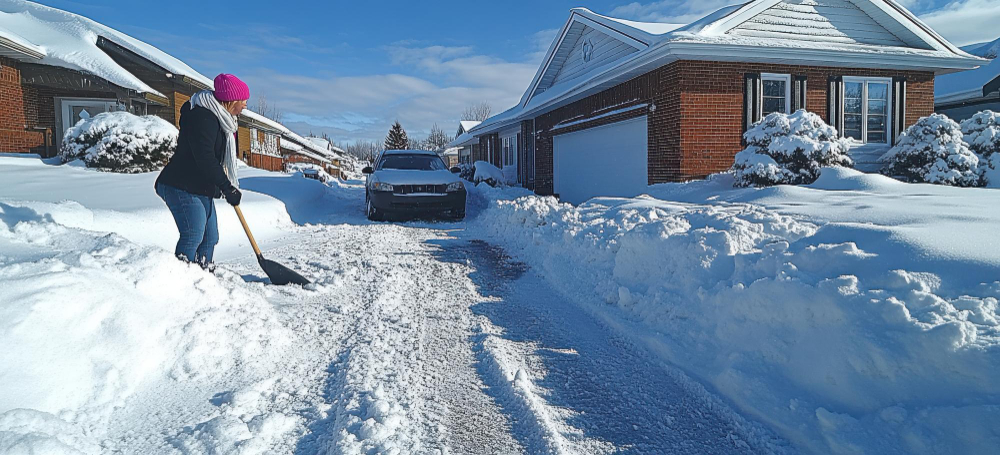
Hey there! As winter’s chill sets in, let’s have a real talk about a common headache for many of us: finding a safe ice melt for concrete surfaces. We all should be cautious about the ice melt we are using, one wrong decision can ruin your entire floor and driveway beauty and put a load on your wallet. So, let’s dive into the world of safe ice melt for concrete and figure out which concrete safe ice melter ones you can trust. We’ll also take a good, hard look at the not-so-great sides of each option (other than Safe Thaw, of course) because, let’s be honest, everything has its downsides.
Key Takeaways
- Safe Thaw is a 100% chloride-free, non-corrosive ice melt formulated for concrete-safe winter use.
- Rock salt can contribute to concrete scaling and cracking by increasing freeze-thaw stress and chloride exposure.
- Calcium chloride melts ice quickly, but it absorbs moisture and can intensify freeze-thaw damage when overused.
- Magnesium chloride is often marketed as gentler than rock salt, but it is still chloride-based and should be used carefully on concrete.
- Acetate-based deicers can be safer for new concrete, but they are often more expensive and may not be necessary for everyday residential use.
- New, decorative, cracked, or poorly sealed concrete needs extra caution during winter.
- Best practice: remove snow early, apply deicer only as directed, clear slush after melting, and reseal concrete before winter when needed.
Safe Thaw: A 100% Chloride-Free, Concrete Safe Ice Melt
Safe Thaw is a 100% chloride-free, non-corrosive ice melt specifically formulated to protect concrete surfaces. Its patented formula contains a modified crystalline amide core combined with a special glycol admixture, making it effective at melting ice without damaging concrete when used as directed.

Safe Thaw
Safe Thaw was created as the ice management solution for tough winter environments. Ideal in commercial and industrial properties, shops, government agencies, bridges, and construction.
Why Customers Choose Safe Thaw
- 100% chloride-free and non-corrosive formula
- Designed for concrete-safe winter maintenance when used as directed
- Patented formula using a modified crystalline amide core and special glycol admixture
- Suitable for driveways, walkways, steps, commercial entries, and industrial surfaces
- Product data and safety information available for users who need technical details
- Supports safer winter surface management compared with repeated rock salt use
- Available for residential, commercial, and bulk winter preparation
Does Rock Salt Ruin Concrete? The Impact of Chemical Corrosion
Yes. Salt-based ice melts such as rock salt can damage concrete by promoting scaling, cracking, moisture penetration, and freeze-thaw deterioration. Repeated use can also increase chloride exposure, which may contribute to corrosion in reinforced concrete.
Is Calcium Chloride Industrial Strength Ice Melt Truly Safe for Walkways?
Calcium chloride melts ice quickly, but it absorbs moisture and can contribute to freeze-thaw cycles that damage concrete surfaces. It should be used cautiously on concrete, especially when surfaces are new, cracked, decorative, or poorly sealed.
Pros and Cons of Magnesium Chloride as a Concrete Safe Ice Melt
Magnesium chloride can perform better than rock salt in colder weather, but it is still chloride-based. Repeated use can attract moisture, leave residue, and contribute to long-term concrete scaling or corrosion concerns if overapplied.
Pros and Cons Table
|
Ice Melt Type |
Pros |
Cons |
Concrete Safety Note |
|
Safe Thaw |
Chloride-free, non-corrosive, designed for concrete-safe use, suitable for residential and commercial surfaces |
May cost more upfront than ordinary rock salt |
Best overall choice when concrete protection is the priority |
|
Rock Salt / Sodium Chloride |
Low cost, widely available, simple to spread |
Can contribute to scaling, cracking, chloride exposure, and corrosion risk |
Avoid repeated use on concrete driveways, walkways, steps, and patios |
|
Calcium Chloride |
Fast melting and strong low-temperature performance |
Absorbs moisture and may increase freeze-thaw damage risk |
Use only when fast melting is required and avoid overapplication |
|
Magnesium Chloride |
Often less harsh than rock salt and works in colder conditions |
Still chloride-based; can leave residue and attract moisture |
Better than rock salt in some cases, but not ideal for long-term concrete care |
|
Acetates / CMA |
Lower corrosion risk and often safer for sensitive surfaces |
More expensive and may have performance limitations in severe cold |
Useful for new or sensitive concrete when budget allows |
|
Sand / Traction Magic |
Improves traction without chemically melting ice |
Does not melt ice and requires cleanup |
Best for traction support, steep areas, and very sensitive surfaces |
Best Ice Melt For Each Situation
|
Situation |
Best Choice |
Why |
|
Concrete driveway |
Safe Thaw |
Chloride-free and non-corrosive for long-term concrete protection |
|
Walkways and steps |
Safe Thaw |
Melts ice while reducing concrete and corrosion concerns |
|
New concrete or sensitive concrete |
Acetates / CMA or traction-only approach |
Lower chloride exposure; confirm with contractor guidance first |
|
Decorative or stamped concrete |
Safe Thaw or chloride-free deicer |
Avoids harsh salt exposure that may affect sealers and finishes |
|
Extreme slip risk on slopes |
Safe Thaw + Traction Magic |
Combines melting action with added grip |
|
Commercial entrances |
Safe Thaw Industrial Strength |
Supports safety, lower residue, and bulk winter preparation |
|
Budget-only deicing |
Rock salt, used sparingly |
Lowest cost, but highest concrete risk with repeated use |
|
No chemical melting needed |
Sand or traction granules |
Improves grip without adding chemical deicer exposure |
Important Warnings About Ice Melt on Concrete
- Do not use harsh chloride-based ice melt on new concrete. New concrete is more porous and more vulnerable to winter chemical damage.
- Do not overapply. More ice melt does not always mean faster or safer melting. Follow the product label.
- Remove slush promptly. Meltwater and residue can refreeze in cracks and joints, causing secondary damage.
- Be careful on decorative, stamped, colored, or sealed concrete. Test a small area first and avoid aggressive salts.
- Avoid mixing different ice melt products. Chemical combinations can create residue, runoff, and unpredictable surface effects.
- Use traction products when melting is not necessary. Sand or traction granules can reduce slip risk without adding chloride exposure.
100% Salt & Chloride-Free, Fast-Acting Ice Management Solution
Comparing Industrial Strength Ice Melt Performance at Low Temperatures
Potassium chloride is another option. It’s less harsh on concrete, but it kinda throws in the towel when temperatures really dip. It’s like having a light jacket that’s good for fall but not quite up for a harsh winter.
Are Acetates the Best Concrete Safe Ice Melt for New Concrete?
Acetate-based deicers can be safer for new concrete than chloride-based salts, but they are usually more expensive and may have environmental or performance trade-offs. They are best considered for sensitive surfaces where chloride exposure must be minimized.
Why Non-Corrosive Industrial Strength Ice Melt Outperforms Traditional Deicers
When you line them all up, Safe Thaw is like that reliable all-season jacket – effective, versatile, and doesn’t let you down. It’s effective, safe for your concrete, and eco-friendly. It’s like choosing that one reliable tool in your shed that you know won’t let you down.

How to Choose an Industrial Strength Ice Melt for Sensitive Concrete Surfaces
So now that we’ve sized up the usual suspects, let’s zoom out for a moment. What really makes a concrete safe ice melter different when the storms hit back-to-back and temperatures stay low for days? The truth is, not all “concrete-safe” labels mean the same thing. Some products throw that claim on the bag just because they’re “less harsh” than straight rock salt. But “less harsh” doesn’t equal safe.
Here’s the thing: Safe Thaw isn’t just “kinder” to your concrete; it’s actually designed from the ground up to avoid the chemical chain reaction that destroys surfaces. While salts and chlorides weaken concrete from the inside out, Safe Thaw creates a barrier effect that keeps the freeze-thaw cycle from digging in. And that’s not marketing fluff—it’s the reason so many industrial properties, government agencies, and even airports trust it over short-lived alternatives.
You could almost think of it like sunscreen for your driveway. You wouldn’t step into blazing sun without a layer of protection, right? In the same way, your driveway needs that shield in winter, not just a quick fix that leaves scars later.
Does Salt Ruin Concrete? Should you really be Worried?
At this point, you might still be wondering: does salt ruin concrete enough to really worry about? Let’s talk honestly. Salt itself doesn’t instantly chew up the surface. The real culprit is the way it pulls water into the pores of concrete. When that water freezes and expands, the pressure has only one way out—cracks. And once cracks form, it’s game over. Moisture keeps finding its way in, and every thaw-freeze cycle pushes those cracks wider.
So yes, salt does ruin concrete—it just does it quietly, over time. One winter may not show it, but after two or three, you’ll notice scaling, flaking, and uneven spots.
Safe Thaw flips that equation. Instead of drawing moisture into the slab, it keeps ice from bonding tightly in the first place. So when it melts, there’s no hidden damage working its way into the concrete’s pores. It’s the difference between using a cleaner that slowly eats your countertop versus one that leaves it untouched while still doing the job.
100% Salt & Chloride-Free, Fast-Acting Ice Management Solution
Repairing Concrete Driveway Scaling and Preventing Future Cracks
But let’s say you’re already dealing with damage. Maybe past winters weren’t kind, and you’re staring at a driveway dotted with cracks or patches of rough, pitted surface. The question naturally becomes: how to repair concrete driveway issues without breaking the bank?
Deeper cracks, though, often require epoxy injections or patching with polymer-modified mixes. These repairs stop cracks from spreading, but they also highlight the need for prevention moving forward.
And here’s the critical part: if you go right back to salt or chloride melts after repairing, you’re undoing your own work. That’s like patching a roof and then leaving the window open in a storm. Choosing a concrete safe ice melter after repairing isn’t optional—it’s essential. It’s what keeps the same damage from cropping up again, saving you from repeating the cycle every year.
What is the Ideal Temperature for Concrete to Cure Before Applying Melt?
Here’s another question people often forget to ask: what’s the right temperature for concrete to cure, and why should I care during winter? The curing stage determines how tough your driveway will be for years to come. Ideally, concrete needs to cure at 50°F or higher for 28 days. If it cures in colder weather without proper insulation, it may never reach full strength.
Why does this matter for ice melt? Because weaker, under-cured concrete is far more vulnerable to chemicals and freeze-thaw damage. Even so-called “milder” deicers can wreak havoc on new driveways. That’s why Safe Thaw becomes the safer option right out of the gate.
So, if your driveway was poured recently or during cooler months, using chloride-based products is like throwing gasoline on a fire. Protecting it with a non-corrosive solution is the only way to preserve its strength long-term.

The Bigger Question: Are You Thinking Short-Term Or Long-Term?
At the end of the day, the decision comes down to mindset. Are you looking for the cheapest bag that works for one storm, or are you thinking about your driveway’s condition five winters from now? Because that’s the fork in the road.
Yes, you can save a few bucks by buying generic salt or a blend of chlorides. And yes, it will melt the ice quickly. But when you add up the cost of concrete repairs, landscaping replacements, rusted tools, and corroded vehicles, those savings disappear fast. A concrete safe ice melter isn’t just about surface safety—it’s about protecting everything connected to that surface.
And here’s the kicker: Safe Thaw isn’t just for homeowners. It’s trusted in commercial lots, bridges, and even transit areas where failure simply isn’t an option. If those heavy-duty environments rely on it, imagine the peace of mind it offers for your own driveway.
Conclusion: Protecting Your Infrastructure with Concrete Safe Ice Melt
When you put it all together, the question isn’t “which ice melt works fastest” but “which ice melt keeps working without causing collateral damage?” Salts and chlorides may feel like quick wins, but they slowly chip away at the very surface you’re trying to protect. Safe Thaw, as a concrete safe ice melter, takes the long view. It answers the nagging questions—does salt ruin concrete, how to repair concrete driveway, what’s the right temperature for concrete to cure—by removing those risks altogether.
The choice is simple: skip the salts, stop the cycle of damage, and use Safe Thaw for real, lasting protection. Because when it comes to winter safety, it isn’t just about melting ice—it’s about preserving what matters most.
Try Also Our Other Winter Safety Products
Safe Paw
The Original and #1 Selling Pet and Child Safe Ice Melt for over 20 years. Guaranteed environmentally safe – will not harm waterways and sensitive wetlands. Safe Paw can change how winter affects our planet.

Ice Traction (with Traction Magic™)
Ice Traction is your go-to winter solution for driveways, walkways, parking lots, and even black ice on the road. Unlike salt or ice melts, it delivers instant grip on snow and slippery surfaces with no wait time.
Just spread and go.
Instant Grip. Zero Melt Time.
Total Confidence on Black Ice