To clean granite steps, start with warm water and a small amount of mild, pH-neutral soap for routine dirt. For stubborn stains, identify the stain type before using a stone-appropriate poultice or granite cleaner. Sealing can improve stain resistance when appropriate for the specific stone, while winter maintenance should begin with mechanical snow and ice removal before using any deicing product.
The Natural Stone Institute recommends neutral cleaners, stone soap, or mild liquid dishwashing detergent with warm water for routine natural-stone care. (Natural Stone Institute)
Granite steps are a popular choice for homes and businesses due to their elegance, durability, and timeless appeal. However, as with all natural stones, they can accumulate dirt, and grime, and even develop unsightly stains over time. Cleaning them can seem daunting, especially when considering the porous nature of granite that makes it susceptible to stains. But with the right methods, you can restore their pristine beauty. Here are four tried and tested methods on how to clean granite steps effectively.
Key Takeaways
- Mild, pH-neutral soap and warm water are suitable for routine granite cleaning.
- Stain-removal methods should be selected according to the type of stain.
- Avoid acidic cleaners and abrasive cleaning products that may affect the stone or its finish.
- Sealing can improve stain resistance, but not every granite surface requires the same sealing schedule.
- During winter, remove loose snow and ice mechanically first and confirm that any deicing product is compatible with the granite, joints and surrounding materials.
Natural Stone Institute guidance supports mild/neutral cleaners and notes that sealing makes stone more stain-resistant rather than stain-proof and is not necessarily required for every stone. (Natural Stone Institute)
How to Clean Granite Steps with Mild Soap and Water
For general cleaning and maintenance of your granite steps, sometimes all you need is some warm soapy water. This simple solution can effectively remove dirt and light stains.
Steps:
- Mix a few drops of mild dishwashing liquid into a bucket of warm water. Avoid using acidic or harsh cleaners as they can damage the granite surface.
- Dip a soft cloth or sponge into the soapy water and wring out excess liquid.
- Gently scrub the granite steps, focusing on stained or particularly dirty areas.
- Rinse thoroughly with clean water and dry with a soft cloth to prevent water spots.
Removing Stubborn Stains: A Natural Non-Slip Solution for Granite Steps
The appropriate treatment depends on the type of stain. Oil-based, organic, metallic and biological stains can require different cleaning agents, so identify the likely stain source before preparing a poultice. For deep or persistent staining, use stone-specific guidance or consult a natural-stone professional.
The Natural Stone Institute specifically recommends identifying stain type first and provides different approaches for oil-based, organic, metal and biological stains. (Natural Stone Institute)
Steps:
- For organic stains like coffee or tea, mix baking soda with hydrogen peroxide to form a paste.
- For oil-based stains, mix baking soda with water.
- Apply the paste directly to the stain and cover it with plastic wrap, sealing the edges with tape.
- Let it sit for 24 hours.
- Remove the plastic wrap and wash away the poultice with warm water. Dry thoroughly.

Safe Thaw
Safe Thaw was created as the ice management solution for tough winter environments. Ideal in commercial and industrial properties, shops, government agencies, bridges, and construction.
When to Use Professional Stone Cleaners for Deep Cleaning
For deeper cleans, especially if it’s been a while since your last cleaning, consider using a stone cleaner specifically designed for granite.
Steps:
- Follow the manufacturer’s instructions closely. Typically, it involves spraying the cleaner and letting it sit for a specified time.
- Use a soft brush to gently scrub the steps.
- Rinse thoroughly and dry with a soft cloth.
Pros & Cons Table
|
Method |
Advantages |
Limitations |
|
Mild soap and water |
Simple; appropriate for routine dirt; minimal equipment required |
May not remove embedded or old stains |
|
Stone-appropriate poultice |
Targets localized stains; treatment can be adapted to stain type |
May require 24–48 hours and repeat applications |
|
Granite-safe stone cleaner |
Useful for heavier buildup or periodic deep cleaning |
Product must be compatible with the specific stone and finish |
|
Sealing when appropriate |
Improves resistance to staining and makes future maintenance easier |
Does not clean existing stains; not every granite surface requires the same treatment |
Natural Stone Institute notes that stubborn stains can require a poultice and that treatments sometimes need to be repeated. (Natural Stone Institute)
Maintaining Granite in Winter: The Importance of Regular Sealing
One of the best ways to ensure your granite steps remain in top condition is to seal them regularly. Sealing fills the pores in the granite, preventing stains from setting in and making cleaning easier.
Steps:
- Clean the granite steps and ensure they’re dry.
- Apply a granite-specific sealing product as per the manufacturer’s instructions.
- Allow the sealer to dry and set, usually 24 hours.
Protecting Granite Steps in Winter with Safe Thaw During colder months, ice can form on granite steps, making them slippery and dangerous. While many turn to salt as a solution, traditional salts can cause damage to granite and corrode adjacent metallic parts over time.
100% Salt & Chloride-Free, Fast-Acting Ice Management Solution
What is the Best Concrete Safe Ice Melt for Granite Steps?
It’s a chloride and toxin free, industrial-use ice melt that’s perfect for granite steps, the perfect answer to your question of how to clean granite steps. Not only is Safe Thaw effective in melting ice, but it’s also non-corrosive, ensuring your granite remains unharmed. Its unique formula promises consistent effectiveness season after season. Safe Thaw’s patented compound, consisting of a modified crystalline amide core combined with special glycol admixture and traction agents, guarantees that your steps remain slip-free without compromising their integrity. For those with electrical installations nearby, like outdoor lighting, Safe Thaw’s non-corrosive nature means you won’t have to worry about short circuits either.
How to Get Ice Off Steps Without Salt: Natural Stone Ice Safety
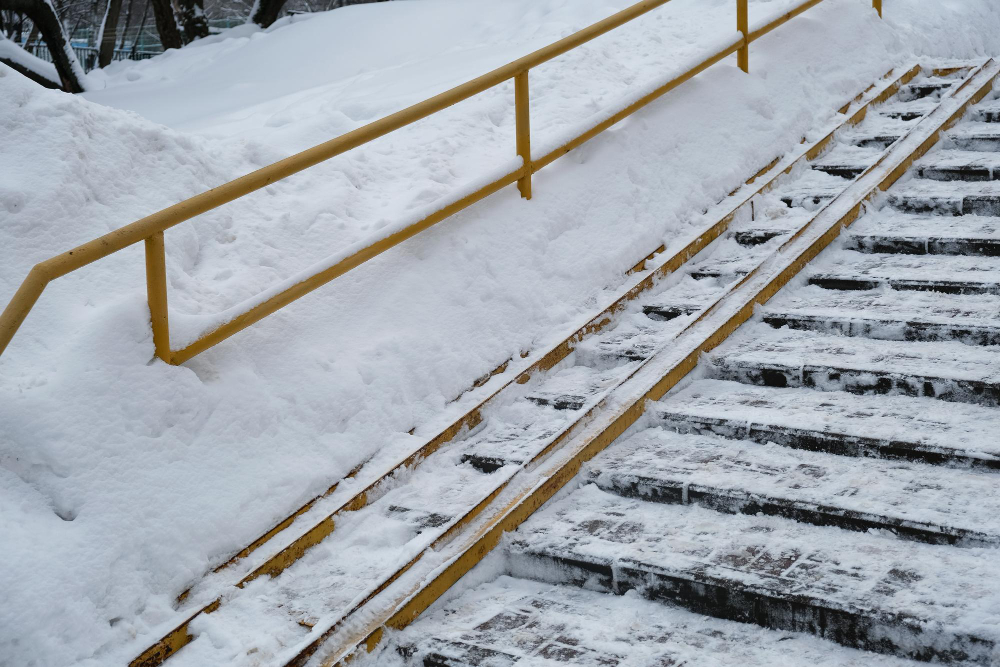
Once you’ve mastered cleaning granite steps, winter introduces a different challenge: ice. The question many ask is, “How to get ice off steps without salt?” It’s a fair concern because traditional salts can cause scaling, surface dullness, or even micro-cracks in granite over time.
The simplest method is mechanical removal. Using a plastic shovel or rubber-tipped scraper prevents scratching while clearing away snow and thin ice. Another option is laying down traction mats that provide grip without introducing chemicals. But when the ice is stubborn and needs melting, a chloride-free solution like Safe Thaw works effectively without the risks associated with salt-based products. This approach not only preserves your granite but also ensures safety on high-traffic steps during freezing conditions.

How to Melt Ice on Steps Safely to Prevent Slippery Granite Stairs
For many, the winter problem isn’t cleaning but how to melt ice on steps quickly without causing harm. Here’s where method matters. Pouring hot water might seem like a quick solution, but it often backfires, refreezing into a more dangerous layer of black ice. Using chemicals like calcium chloride may clear the ice, but they degrade the integrity of the stone.
Instead, a balanced method works best. Start with manual clearing, add traction where needed, and then apply a safe ice melt designed for delicate materials. Safe Thaw, for instance, releases a deicing liquid as its granules come into contact with ice. This ensures a steady, controlled melt at sub-zero temperatures while also leaving behind traction for added safety. Unlike aggressive salts, it doesn’t pit the granite or leach into nearby soil and vegetation.
Pro Tips for Managing the Danger of Icy Granite Stairs
Sealing can improve granite’s resistance to staining, but sealing requirements vary according to the stone, finish, existing treatment and sealer used. Follow the recommendations provided for the specific granite and sealing product rather than relying on a fixed schedule.
Natural Stone Institute guidance explicitly notes that some stones may not require sealing and recommends consulting the stone supplier or sealer manufacturer about frequency. (Natural Stone Institute)
The beauty of granite is that it doesn’t demand daily attention. A mix of seasonal cleaning, careful deicing, and regular inspection ensures those steps stay as elegant as the day they were installed. This proactive routine protects not only aesthetics but also the safety of those who rely on them.
100% Salt & Chloride-Free, Fast-Acting Ice Management Solution
Important Granite-Care Precautions
Test unfamiliar cleaning products on a small, inconspicuous area before treating a visible section. Avoid acidic cleaners such as vinegar and avoid abrasive powders or tools that may alter the stone or its finish. Do not assume that every granite surface requires sealing. For outdoor steps, also consider joints, surrounding materials and existing cracks when selecting winter-maintenance methods.
Natural Stone Institute advises against acidic cleaners for natural stone and notes that some abrasive cleaners may scratch stone. It also specifically notes that hydrofluoric-acid-containing products can attack granite and quartzite. (Natural Stone Institute)